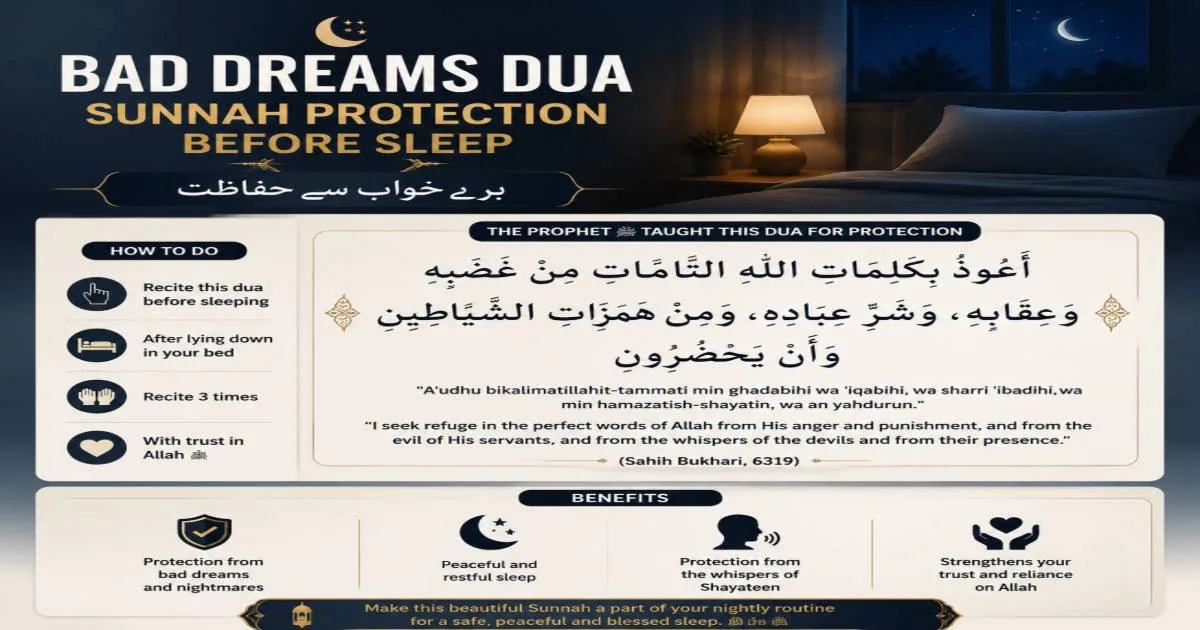
Bad Dreams Dua: Sunnah Protection Before Sleep
Bad Dreams Dua is for the moment a person wakes frightened by a disturbing dream and needs the Sunnah response rather than long guessing about meanings. This topic is different from insomnia: here the issue is fear after a dream, not simply the inability to fall asleep.
🕋 Qilaj Islamic Activity Center
Sirf 1 minute: Qurani Hal, Tasbih ya Islamic Quiz start karein
آپ کی پریشانی کیا ہے؟
📿 33 Tasbih Challenge
33 bar SubhanAllah complete karein
🧠 Islamic Quiz Challenge
Arabic Matn
أَعُوذُ بِاللَّهِ مِنَ الشَّيْطَانِ الرَّجِيمِ
Transliteration: A‘udhu billahi minash-shaytanir-rajim
Reference: Sunnah response to bad dreams
Urdu Section: برے خواب سے حفاظت
برے خواب کا معاملہ بے خوابی سے الگ ہے؛ یہاں اصل پریشانی نیند نہ آنے کی نہیں بلکہ ڈراؤنے منظر سے گھبرا کر اٹھنے کی ہوتی ہے۔ سنت نے ایسے خواب کے بعد واضح آداب بتائے ہیں تاکہ انسان خوف، وہم اور غیر ضروری بیان بازی سے بچ سکے۔ اس دعا کا مقصد دل کو اللہ کی پناہ میں دینا اور شیطانی اثر سے اطمینان حاصل کرنا ہے۔
برا خواب آئے تو بائیں طرف ہلکا سا تھتکارنا، شیطان سے پناہ مانگنا، پہلو بدلنا اور خواب کو لوگوں میں نہ پھیلانا بہتر ہے۔ اگر بار بار ڈراؤنے خواب آتے ہوں تو سونے سے پہلے اذکار، پاکیزہ معمول اور ذہنی دباؤ کم کرنے پر توجہ دی جائے۔ ہر خواب کو غیبی پیغام سمجھ لینا درست نہیں؛ شریعت نے سکون کا راستہ بتایا ہے۔
English Section: Meaning and Islamic Understanding
Bad Dreams Dua should be understood through its own subject. Here the concern is nightmares and fear after waking. This guidance is presented as Sunnah comfort before sleep, so bad dreams are handled with dhikr and calmness rather than fear or storytelling. The Sunnah guidance gives calm and protection before sleep without turning dreams into panic.
Start with the Arabic, then bring the exact worry into your own dua. Read the Sunnah protections, avoid frightening talk at night, sleep with trust in Allah, and seek calm rather than panic. That protects sincerity and prevents careless dependence on words alone.
Hindi Section: बुरे सपनों से हिफाज़त
यह भाग केवल बुरे सपनों से हिफाज़त के लिए लिखा गया है। यहाँ दुआ को हर समस्या पर चिपका देने वाला सामान्य वाक्य नहीं बनाया गया। असल बात यह है कि इंसान अपनी परेशानी को अल्लाह के सामने रखे, अरबी शब्दों का अर्थ समझे, और फिर उसी विषय से जुड़ा सही कदम उठाए। इस विषय में मुख्य चिंता nightmares and fear after waking है, इसलिए पढ़ने वाले को अपनी नीयत और अपने व्यवहार दोनों पर ध्यान देना चाहिए।
दुआ पढ़ते समय दिल में विनम्रता होनी चाहिए। अगर घर, व्यापार, पढ़ाई, बीमारी, सुरक्षा या रिश्तों से जुड़ी कोई वास्तविक जिम्मेदारी है, तो उसे नज़रअंदाज़ न किया जाए। इस अमल के साथ सबसे काम की बात यह है कि seek refuge, lightly spit to the left three times, and do not narrate the dream। इस तरह दुआ केवल शब्द नहीं रहती, बल्कि सुधार, सब्र और सही फैसले की राह बनती है।
Why This Dua Fits the Situation
- It teaches the sleeper to seek Allah’s protection immediately after a frightening dream.
- It separates nightmares from ordinary sleep difficulty, so the response stays precise.
- It discourages retelling scary dreams to people who may increase fear.
- It connects bedtime protection with Surah Ikhlas, Falaq, Nas, and simple Sunnah habits.
- It helps children and adults calm down without building superstitious stories around dreams.
Reading Method and Daily Application
Best time: When waking from a bad dream, and also before sleeping as protection. Recitation: Seek refuge with Allah, lightly spit to the left three times without saliva, change the sleeping side, and do not narrate the dream unnecessarily. Duration: Use this response whenever a nightmare occurs; keep bedtime adhkar as a nightly habit.
Wudu: Sleeping with wudu is from good Islamic manners when possible. Reduce frightening media before bed, avoid sleeping after heated arguments, and teach children a short response they can remember: seek Allah’s protection and call a parent calmly.
Bad Dreams Sunnah Note
The wording and reference for this bad dreams entry should be read in its proper Islamic context; any verse or hadith cited here is a source of guidance, not a promise of instant or guaranteed results. Readers may also consult the authority source here: reference source.
Real-Life Usage
This guidance fits a child waking afraid, an adult disturbed by repeated nightmares, or a person worried after seeing something unpleasant before Fajr. The right response is not to search for frightening interpretations at once. Read the Sunnah protection, calm the body, turn to the other side, and begin the day without spreading the dream.
Related Guides on Qilaj
Conclusion
A bad dream should not be given control over the whole day. Islam gives a short, dignified response: seek refuge in Allah, avoid publicising the dream, and return to calm worship. In that way the nightmare remains a passing disturbance, not a story that rules the heart.
Disclaimer
Urdu: برے خواب کے بعد سنت طریقہ اپنائیں، خوفناک تفصیل پھیلانے سے بچیں، اذکار پڑھیں اور مسلسل پریشانی ہو تو مشورہ لیں۔
English: This Sunnah reminder offers comfort before sleep. Repeated nightmares, trauma, or severe anxiety may need trusted family support or clinical care.
Hindi: यह सामग्री धार्मिक जानकारी और आध्यात्मिक हौसले के लिए है। इलाज, कानून, वित्त, मानसिक स्वास्थ्य या आपात स्थिति में योग्य विशेषज्ञ से सलाह लें।
FAQs
Why is this dua especially relevant for bad dreams dua?
It addresses nightmares and fear after waking through words that turn the reader back to Allah. The benefit is not in a mysterious formula; it is in asking with the right meaning while correcting the exact weakness connected to bad dreams dua.
What should be changed in daily life while reading bad dreams dua?
The first visible step after this amal is practical: follow Sunnah responses to bad dreams, avoid spreading frightening details, and sleep with azkar; this keeps the recitation connected with obedience and responsibility.
Which misunderstanding should be avoided in this topic?
Do not present this bad dreams recitation as a paid spell, a guaranteed result, or a shortcut that cancels normal duties.
How can families use this guidance responsibly?
Families can read the meaning together and choose one small action for bad dreams, so the article remains useful beyond recitation count.
When is it better to ask a scholar or expert for help?
Ask a qualified scholar if the religious wording or ruling around bad dreams is unclear, and use the right professional help when the case moves beyond ordinary advice.