Clear, research-backed answers for Muslims living in America — covering E621 (MSG), Halal gummies, Sobrassada sausage, and the purity of fruits.
Walking through a US grocery store as a Muslim can feel like a maze. E621 halal or haram? Are those colorful halal gummies or pork-based? What about that fancy sobrassada halal sausage? And do we ever doubt fruits halal status? This guide covers all four with authentic Islamic perspectives, ingredient breakdowns, and 10 frequently asked questions.
1. E621 (Monosodium Glutamate) – Halal or Haram?
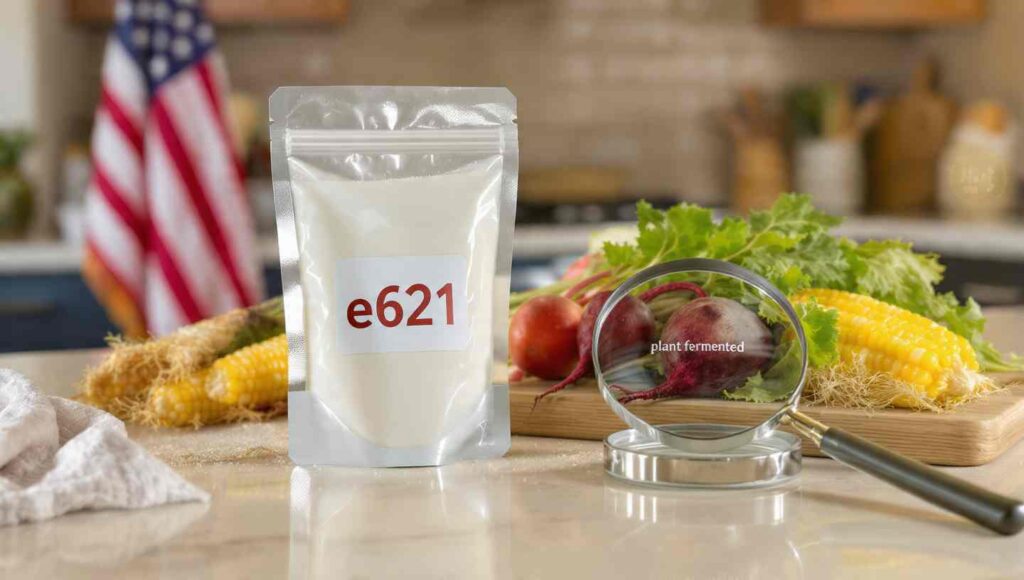
E621, known as MSG, is a flavor booster in chips, instant noodles, and restaurant food across the USA. The ruling depends on its origin.
✔ Generally Halal if derived from plant fermentation (sugar beets, corn, molasses) or chemical synthesis. Most US manufacturers like Ajinomoto use vegetable sources.
✖ Haram if sourced from animal tissues not slaughtered Islamically. Extremely rare in the US, but always verify.
Why most E621 in USA is permissible
Modern MSG production ferments corn, tapioca, or sugar beets—similar to making yogurt. Leading supplier Ajinomoto confirms their MSG for the US market is plant-based. However, if you see “natural flavors” alongside E621, it’s safer to choose certified Halal products.
Quick tip for shoppers
Look for “vegetarian” or “vegan” labels on packages containing E621. Contact brands via email—many respond about their sourcing.
2. Halal Gummies – Chewy Candies & Vitamins
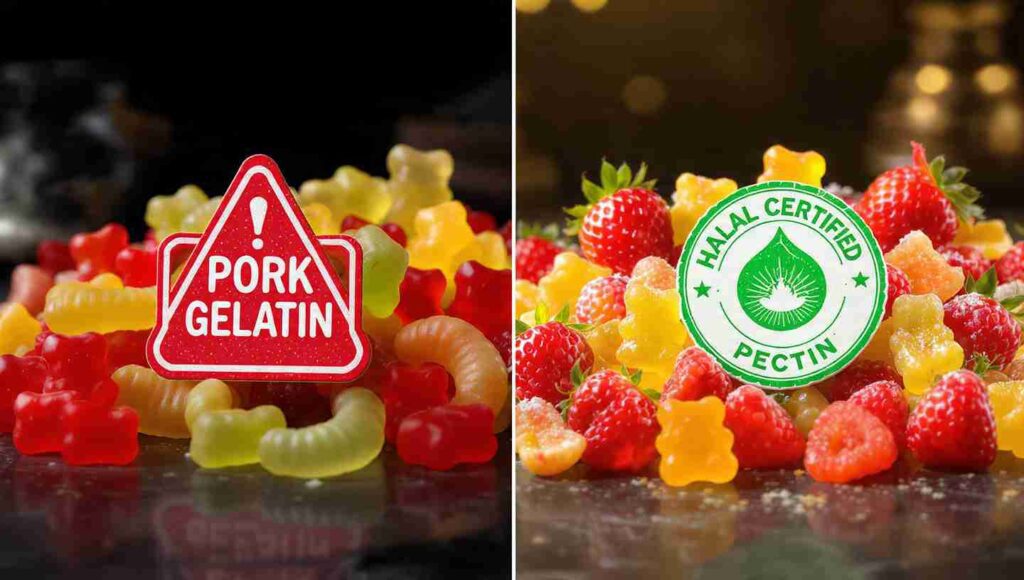
Gummy bears, worms, and even children’s vitamins usually contain gelatin. In the US, gelatin overwhelmingly comes from pork (haram). But the market is changing.
🍖 Haram gummies
Contain pork gelatin (common in Haribo, Trolli, and store-brand gummies unless stated otherwise). Avoid if it just says “gelatin”.
✅ Halal gummies
Made with Halal beef gelatin (certified) or plant-based thickeners like pectin, agar-agar, or starch. Brands like “Ziyad”, “Albayrouty”, or “Halal Gummy Co.” offer certified options.
How to identify Halal gummies in USA
- Look for a recognized Halal certification logo (IFANCA, HFSAA, etc.).
- Check for “pectin” instead of gelatin — these are fruit-based and automatically Halal.
- If gelatin is listed but the package says “Halal beef gelatin”, it’s permissible.
Amazon and many Middle Eastern stores now stock Halal gummy brands. Don’t assume generic gummies are safe; always verify.
3. Sobrassada – Spanish Sausage & Halal Status
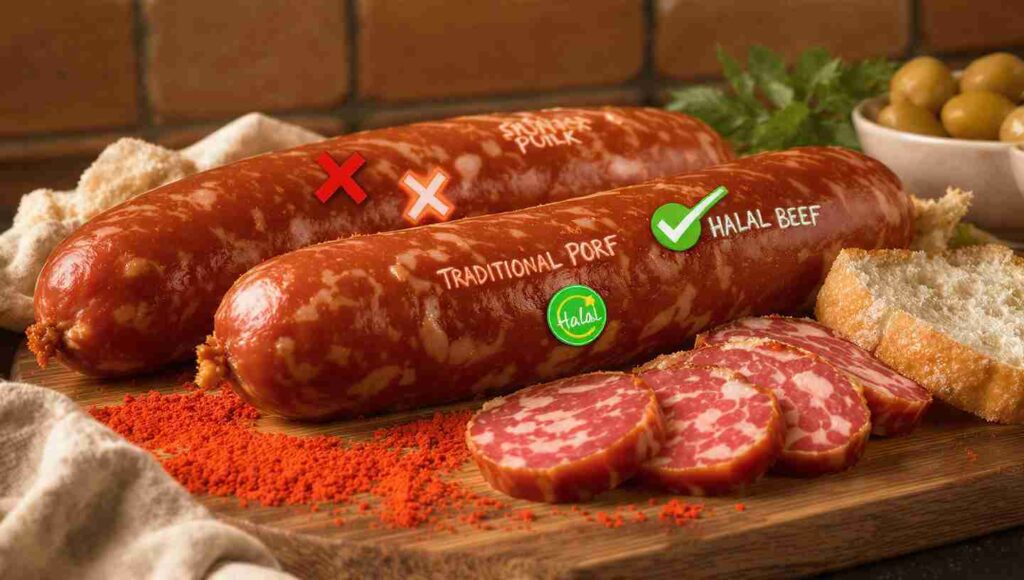
Sobrassada is a soft, cured sausage from Spain (Mallorca), spreadable and spiced with paprika. It’s becoming trendy in US gourmet shops.
✖ Traditional sobrassada is Haram because it’s made from pork and pork fat. The authentic recipe is pork-based.
Is there Halal sobrassada?
Yes — due to demand, some US-based Halal butchers and online stores now produce Halal sobrassada using beef, chicken, or turkey, and Halal spices. They mimic the texture and flavor. Always look for “Halal certified” on the package. If you see sobrassada in a regular supermarket without Halal labeling, assume it’s pork and avoid.
💡 Remember: In Islam, all pork and its by-products are strictly forbidden. Even a small amount of pork fat or gelatin renders a food haram.
4. Fruits – Naturally Halal, With One Caveat
🍎 All fresh fruits are 100% Halal – a clear blessing from Allah. An apple from Washington, a Florida orange, or imported mangoes are all pure (tayyib).
But be careful with coated or processed fruits
- Waxed fruits: Some apples and citrus are coated with wax to preserve shine. If the wax is animal-derived (shellac from insects or beeswax is debated), washing with warm water or peeling removes concern.
- Dried fruit: Check for added gelatin or non-Halal glazes. Some dried cranberries or apricots may contain gelatin for shine — those would be haram if gelatin is pork-based.
- Candied fruit: Avoid if it contains gelatin or vanilla extract (alcohol-based) without certification.
Stick to whole, unpackaged fresh fruit and you’re on safe ground. Organic or conventional — both Halal.
Quick glance: 4 keywords verdict
| Item | Typical US Status | Halal if… |
|---|---|---|
| E621 (MSG) | Usually Halal (plant fermented) | No animal enzymes; veg source |
| Gummy candies | Often Haram (pork gelatin) | Halal beef gelatin OR pectin/agar |
| Sobrassada | Haram (pork sausage) | Specifically labeled Halal (beef/chicken) |
| Fresh Fruits | 100% Halal | Wash off any non-Halal wax |
🔍 10 Frequently Asked Questions
1. Is E621 halal if it says “natural flavor”?
“Natural flavor” can be plant or animal derived. If the product isn’t Halal-certified, it’s safer to avoid or contact the company. E621 itself is usually fine, but mixed flavors may carry non-Halal carriers.
2. Are all gelatin-free gummies halal?
Yes, if they use pectin, starch, or agar-agar. Those are plant-based and always Halal. Always re-check for alcohol-based glazes, but rare in gummies.
3. Can I eat sobrassada in a restaurant if they claim it’s chicken?
Only if the restaurant is reputable and provides Halal certification for their meat. Cross-contamination with pork is also a major risk in non-Halal kitchens.
4. Does cooking or chemical change make pork-derived E621 halal?
No. Istihala (transformation) is a complex concept; the majority of scholars say pork derivatives remain impure. Avoid if animal source is suspected.
5. Are fruits with insect wax (shellac) halal?
Scholars differ. Shellac is from insects (lac bugs). Some consider it permissible, others advise to wash/peel. Peeling or washing with warm water removes wax.
6. What Halal gummy brands are available in the USA?
“Halal Gummy Co.”, “Ziyad” gummy bears, “Albayrouty” jelly candies, and some “YumEarth” (pectin-based) are widely available online and in Halal stores.
7. Is sobrassada always pork?
Authentic sobrassada is always pork. Only specialty Halal versions use beef or poultry. Read labels carefully.
8. Do I need to worry about E621 in restaurants?
Most restaurants use MSG powder from reliable vegetable sources. But if you’re strict, ask if they use Ajinomoto brand (plant-based).
9. Can Muslims eat gelatin from non-pork animals slaughtered by People of the Book?
Majority opinion: meat must be slaughtered Islamically (Tasmiya). If beef gelatin is from a non-Halal slaughterhouse, it’s not Halal. Look for Halal-certified gelatin.
10. Are dried fruits with “confectioner’s glaze” halal?
Confectioner’s glaze is often made from shellac (insect-derived). Some scholars permit it, others advise avoiding. If it’s from Halal-certified fruits, it’s more reliable.
Deep dive: ingredient awareness for American Muslims
Being a conscious consumer in the US means understanding both ingredient terminology and Islamic rulings. Here are extra insights:
E621 in unexpected places
Besides chips, MSG is added to seasoned salts, broths, and some salad dressings. Since E621 is typically plant-based in the US, many Muslims consider it Halal by default. Still, if you have doubts, products with “No MSG” labels avoid the issue.
Halal gummies – the rise of pectin
Mainstream brands like “Annie’s” or “Black Forest” use gelatin but may use pork. Conversely, “Trader Joe’s” Scandinavian Swimmers are gelatin-free (pectin). Always scan ingredients; the term “vegetable gelatin” is sometimes a misnomer – if it says gelatin without source, don’t assume.
Sobrassada Halal alternatives
If you’re craving Spanish flavors, look for “Halal chorizo” or “Halal sobrassada” from online butchers like “Halal Sausages Co.” or “Organic Halal Meat” in Chicago. They ship nationwide.
Fruits: wax and beyond
The FDA allows food-grade wax (carnauba wax from palm tree – Halal) or shellac. Carnauba is plant-based, so it’s fine. If you see “resinous glaze” it might be shellac. Washing fruit with diluted vinegar removes wax easily.
✅ Summary: E621 halal or haram? Mostly Halal in USA. Halal gummies exist, avoid mainstream gelatin. Sobrassada halal only if certified. And fruits halal — always, just wash them. Stay informed, check labels, and look for Halal logos. Your diligence is worship. © 2025 Halal Consumer Guide – USA. All information shared for educational purposes. Always verify with reliable Islamic scholars and certification bodies.