How Many Pages is the Quran? Structure, History & Complete Guide
How Many Pages is the Quran? Structure, History & Complete Guide
Quran: Complete Guide to the Holy Quran, Its History, Structure, Benefits, and How to Read It
The Quran, also written as the Holy Quran or Quran Kareem, is the sacred book of Islam. Furthermore, Muslims recognize it as the final revelation from Allah (God). For many beginners exploring Islam’s holy book, a common structural question arises: how many pages is the quran? Muslims firmly believe that every single word is the direct speech of Allah. Consequently, Angel Jibreel (Gabriel) revealed these words to Prophet Muhammad (peace and blessings be upon him) over approximately 23 years.
For more than fourteen centuries, the Quran has remained completely unchanged. Today, it continues to guide millions of Muslims in matters of faith, worship, and morality. In addition, it shapes family life, business ethics, justice, and personal character. It is not simply a religious text. Instead, it serves as a complete source of guidance for anyone seeking truth and wisdom. For example, it provides an absolute quran defense of the helpless. It established clear human rights, social equity, and economic justice long before modern legal systems existed.
Perhaps you want to read the Quran online to understand its core message deeply. Alternatively, you might want to learn about its rich history or explore the 114 Surahs. Therefore, finding out exactly how many pages is the quran will help you plan your daily recitation habit perfectly. This comprehensive guide explains everything clearly in one place.
The Quran is the primary holy scripture of Islam. Specifically, it represents the final divine revelation sent by Allah to humanity. Muslims believe it confirms the essential teachings given to earlier prophets. These included Prophet Adam, Prophet Noah, Prophet Ibrahim (Abraham), Prophet Musa (Moses), Prophet Dawud (David), and Prophet Isa (Jesus). Furthermore, it serves as the final, complete guidance for all people until the Day of Judgment.
Human beings did not write this book. Instead, Muslims believe that the Quran is the literal word of Allah. Every single verse (Ayah) carries immense guidance, wisdom, commands, and historical lessons. These elements help people understand their true purpose in life. Consequently, it acts as an eternal lighthouse for navigating complex modern challenges. When you plan a systematic study of these verses, knowing exactly how many pages is the quran helps you allocate your time properly.
Additionally, the Quran teaches believers how to worship Allah with pure sincerity. It shows them how to build strong families and treat neighbors with kindness. It also explains how to conduct business honestly and remain patient during hardships. Ultimately, it prepares the soul for the Hereafter. It is an active spiritual mirror that reflects a believer’s inner state accurately.
Meaning of the Word “Quran”
The Arabic word Quran (القرآن) originates from the classical root word Qara’a. This root term means to read, to recite, or to proclaim. Therefore, this name reflects the Quran’s unique nature as an auditory and textual miracle. It is a book meant to be recited aloud, memorized, and practiced throughout daily life.
Because of its supreme significance, the text contains several beautiful titles. There are several famous names of quran in quran itself. These names highlight its multidimensional role in transforming human consciousness:
Al-Quran Al-Kareem: The Noble or Generous Quran.
Al-Furqan: The Criterion between ultimate truth and falsehood.
Adh-Dhikr: The Reminder or the Timeless Remembrance.
Al-Kitab: The Divine Book that structures human existence.
Noor: The Piercing Light that dispels spiritual ignorance.
Ash-Shifa: The Deep Healing for hearts, minds, and souls.
Each of these names emphasizes a distinct aspect of divine functionality. Thus, they illustrate that it is a living force designed to align human spiritual paths.
Why Was the Quran Revealed?
Allah revealed the Quran to guide humanity out of deep chaos and self-worship. He offered a path toward the pure light of faith, righteousness, and mercy. Therefore, the Quran addresses the human condition fundamentally. It answers life’s most pressing existential questions directly:
Who created us and gave us our unique consciousness?
Why are we here on this earth?
How should we worship Allah perfectly to build an uninterrupted relationship with Him?
How should we treat our fellow human beings, animals, and the global environment?
What happens to our souls after physical death?
How can we attain eternal Paradise and safeguard our souls from Hellfire?
These timeless, immutable teachings make the text deeply relevant for every single generation. They remain completely independent of cultural backgrounds or linguistic limits.
How the Quran Was Revealed
The revelation of the Quran began in the year 610 CE. This historic event took place in the isolated Cave of Hira on Jabal al-Noor near Makkah. During this encounter, Angel Jibreel brought the first historic verses of Surah Al-‘Alaq to Prophet Muhammad (peace and blessings be upon him). This intense spiritual meeting marked the official beginning of his prophethood.
However, Allah did not send down the Quran as a pre-compiled volume all at once. Instead, he revealed it gradually over a span of approximately twenty-three (23) years. Some verses addressed specific communal events, military conflicts, or ethical crises. Other sections systematically established the foundational principles of theology, civil law, and social justice. This gradual method made it exceptionally easy for the early Muslim community to memorize and implement its teachings. For those cataloging its preservation, tracking how many pages is the quran across centuries shows the rigorous consistency of scribes.
Main Themes of the Quran
The Quran addresses every vital component of human life. Consequently, you can view it as an interconnected ecosystem of guidance. Its primary themes include:
Tawheed (Oneness of Allah): The absolute foundation of Islamic theology. It states that Allah is unique, has no partners, and alone deserves worship.
Stories of the Prophets in the Quran: Historical narratives of figures like Abraham, Moses, David, and Jesus. They serve as moral case studies for believers.
The Practical Pillars of Islam: Clear instructions regarding daily Prayer (Salah), Almsgiving (Zakah), Fasting (Sawm), and the Pilgrimage (Hajj).
Absolute Justice and Accountability: A strict emphasis on moral choices, fair business transactions, and defending vulnerable members of society.
Good Character (Akhlaq): Blueprints for showing mercy, exercising forgiveness, respecting parents, and demonstrating patience during severe worldly trials.
Importance of the Quran in Islam
For Muslims worldwide, the Holy Quran represents the ultimate authority in all aspects of existence. It is not an artifact of historical record. Instead, believers recite it daily in their five obligatory prayers. It also functions as the foundational framework for all Islamic jurisprudence, theology, and philosophy. Its structural laws encourage modern societies to pursue compassion, humility, and civic responsibility.
The unparalleled reverence for the Quran is globally visible. Millions of Muslims across the globe, spanning every age group, memorize the text from cover to cover. When analyzing print editions used for this heavy memorization, an understanding of how many pages is the quran helps schools structure their academic goals cleanly. This widespread preservation through disciplined oral memorization has kept the text pristine across generations.
Benefits of Reading the Quran
Engaging regularly with the text provides profound spiritual, emotional, and psychological benefits. For instance, believers notice a dramatic positive shift in their mental clarity and spiritual resilience:
Strengthens Faith (Iman): It provides a direct channel of divine communication that rejuvenates a believer’s spirit.
Provides Spiritual Comfort: It serves as an immediate source of inner tranquility. Thus, it directly calms everyday anxiety and stress.
Encourages High Moral Character: It constantly reminds readers to choose honesty, kindness, and self-control over greed.
Increases Deep Intellectual Wisdom: It equips the human mind with a framework for making ethical decisions in complicated modern scenarios.
History and Preservation of the Holy Quran
The historical journey of the text shows flawless textual preservation. From the very first revelation of Surah Al-‘Alaq (96:1–5), Prophet Muhammad (ﷺ) placed the utmost priority on protecting the integrity of the verses. He did not rely on chance. Instead, he immediately implemented a dual-preservation strategy using human memory and physical writing.
First, the Prophet (ﷺ) encouraged his close companions to memorize every newly revealed verse right away. Many companions dedicated their entire lives to this task, becoming known as Huffaz. Concurrently, the Prophet appointed highly literate scribes to write the verses down on available materials. They used parchment, leather, bones, palm leaves, and polished stone tablets. Therefore, the scribes recorded every single verse under the direct supervision of the Prophet himself. When studying early manuscripts, analyzing how many pages is the quran in modern equivalents highlights the immense density of the text.
Compilation of the Quran
Following the passing of Prophet Muhammad (ﷺ), the Muslim community faced a critical situation. A significant number of prominent Huffaz passed away during the fierce Battle of Yamamah. Recognizing the risk of losing sections of the oral tradition, Caliph Abu Bakr (RA) instructed the master scribe Zayd ibn Thabit (RA) to collect all authenticated written fragments. He compiled them into one master manuscript. Later, this consolidated version remained under the strict protection of Abu Bakr, Umar (RA), and subsequently Hafsah (RA).
As Islam spread to distant regions like Persia, Syria, and North Africa, variations in dialect and pronunciation began to cause confusion. To prevent division, Caliph Uthman formed a specialized committee to produce an official, standardized edition. They based this edition on the authentic master manuscript. Scribes wrote out multiple identical copies and distributed them to major administrative centers. They ordered the destruction of any non-standard variants. These official copies became known as the Uthmanic Mushaf. Today, they form the exact textual blueprint for every Quran printed globally. Consequently, the answer to how many pages is the quran remains remarkably standard.
How Many Pages is the Quran? Detailed Structural Breakdown
To fully grasp the layout of this sacred text, it is helpful to look at its precise structural organization. If you are wondering exactly how many pages is the quran or how it is broken down into readable portions, the standard modern printing text follows a beautifully ordered system:
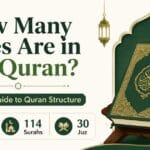
114 Surahs (Chapters)
The text contains exactly 114 Surahs. However, each chapter varies considerably in its physical length. The longest chapter is Surah Al-Baqarah (The Cow). It contains 286 verses and covers nearly three parts of the book. In contrast, the shortest surah in quran is Surah Al-Kawthar. It features only three short, poetic lines.
30 Juz or Paras (Parts)
To help readers complete the entire text systematically, the book is divided into 30 equal parts known as a Juz or Para. This allows readers to pace themselves easily during the holy month of Ramadan. For example, reading the 30th para of quran (also called Juz Amma) is highly popular among beginners. This section contains shorter surahs that are easy to read and memorize. If you want to study the text section by section, you can start with para 1 quran and work your way through to the final parts. When organizing this reading pattern, knowing how many pages is the quran per individual Juz ensures you hit your daily goals cleanly.
Structural Overview Table
This reference table outlines the structural dimensions of the standardized Arabic text, answering common questions about its layout:
Quranic structural Unit
Total Estimated Count
SEO & Practical Reading Context
Total Surahs
114 Chapters
Organized by chronological revelation periods (Makki & Madani).
Total Pages
604 Pages
Based on the standardized modern Saudi-printed Madinah Mushaf.
Total Ayahs (Verses)
6,236 Verses
The universally verified count of individual structural lines.
Total Juz / Paras
30 Parts
Equal divisions designed for systematic monthly readings.
Total Words
~77,430 Words
Exact lexical counts can vary slightly depending on Arabic orthography rules.
Sajdahs (Prostrations)
14 or 15 places
Verses where the reciter and listener are required to prostrate to Allah.
Makki and Madani Surahs
The 114 chapters are classified into two primary categories based on the monumental migration event known as the Hijrah. For those analyzing the text, mapping out how many pages is the quran across these two historical phases reveals interesting differences. Specifically, Makki surahs are often shorter and more numerous. Conversely, Madani surahs are longer and structurally dense.
Makki Surahs (Revealed Before the Migration)
They focus primarily on the core pillars of faith, establishing Tawheed (the absolute Oneness of Allah).
They discuss the certain reality of the Day of Judgment, Paradise, and Hellfire to build spiritual accountability.
They provide emotional comfort to early Muslims by detailing the historic struggles of past Prophets.
They feature short, fast-paced, highly poetic, and rhythmically powerful verses designed to catch attention.
Madani Surahs (Revealed After the Migration)
They focus on structuring a newly formed society, establishing clear laws for civil and state matters.
They detail specific rules regarding family life, including marriage and divorce regulations.
They provide comprehensive instructions on financial transactions, trade laws, and property inheritance.
They explain communal duties like charity (Zakah), fasting (Sawm), and social welfare systems.
They feature longer, structured, prose-style verses that outline legal and ethical codes.
Major Subjects and Quotes from the Quran
The text deals directly with human emotions, psychology, and moral development. It balances profound theology with practical real-world advice. Consequently, it offers comfort during life’s inevitable challenges. Here are some of the most widely appreciated quotes from the quran that provide spiritual guidance:
On Personal Trials and Mental Health: “For indeed, with hardship [comes] ease. Indeed, with hardship [comes] ease.”
— (Surah Ash-Sharh, 94:5–6)
This verse reminds believers that ease co-exists with the trial itself. It is not just something that happens after a trial finishes. For those seeking comfort during difficult times, you can read the full context in our guide on Surah Alam Nashrah (Ash-Sharh). If you look at the physical volume to understand how many pages is the quran in this section, you will find these comforting surahs concentrated heavily in the final sections.
On Human Relationships, Empathy, and Affection: “And He placed between you affection and mercy. Indeed in that are signs for a people who give thought.”
— (Surah Ar-Rum, 30:21)
This serves as a foundational verse regarding marriage in Islam. Specifically, it reminds couples that a successful relationship requires mutual mercy, deep emotional safety, and shared spiritual goals.
Additionally, the text emphasizes taking care of vulnerable people, offering a clear quran defense of the helpless. It commands believers to stand firmly for social justice. They must support orphans, protect people with low-income, and maintain absolute honesty in commercial trade, regardless of personal costs.
How to Read the Quran (Tajweed & Recitations)
To engage with the text correctly, it is essential to understand what language is the quran written in: it is preserved entirely in Classical Arabic. Because it is the literal word of God, Muslims place a high priority on pronouncing every letter perfectly. This priority led to the development of Tajweed quran rules. These are a systematic set of linguistic guidelines that dictate exactly how letters are elongated, where to pause, and how to blend sounds smoothly. Whether your goal is learning how many pages is the quran to track recitation speeds, master text rules always take absolute precedence.
Understanding Hafs vs Warsh Recitations
While the underlying written consonantal text is identical worldwide, the Quran can be recited in several authentic, divinely authorized variant vocalization styles called Qira’at. These trace back through unbroken oral chains directly to Prophet Muhammad (ﷺ). The two most prominent styles used globally today are:
Hafs an Asim: This is the default style used by more than 95% of the global Muslim community today. It is standard across the Middle East, South Asia (Pakistan, India, Bangladesh), Turkey, Europe, and the Americas. If you attend online quran classes for kids in usa or browse modern digital applications, this is the standard style you will encounter.
Warsh an Nafi: This style is widely practiced across North and West Africa, including Morocco, Algeria, Tunisia, Mauritania, and parts of Sudan. It features subtle differences in vowel elongation, pauses, and the pronunciation of certain glottal stops. Therefore, it offers a beautifully unique rhythmic flow while preserving the exact same core meaning. Interestingly, calligraphic adjustments might slightly change your calculation of exactly how many pages is the quran based on the script style.
Difference Between the Quran and the Bible
For students of comparative religion, understanding the theological and structural difference between quran and the bible is crucial for clear analysis. While both books share narratives about key historical figures, they have fundamental differences in their format, source, and theology. If you run a direct comparative physical audit on how many pages is the quran compared to the Old and New Testaments, you will note that the Quran is a single, highly concise volume.
For a detailed historical and academic analysis of divine scriptures and canonical developments across Abrahamic history, you can read the comprehensive evaluations on the official Encyclopædia Britannica Quran Records.
The Source of Dictation: Muslims believe the Quran is the direct, verbatim word of Allah. In contrast, the Bible is a compilation of separate historical books written by various human authors over several centuries.
Linguistic and Textual Preservation: The Quran exists today in its original 7th-century language (Classical Arabic) with total manuscript consensus worldwide. However, the Bible was written across multiple ancient languages and is primarily read today through various historical translations.
Theological View of Jesus Christ: The Bible presents Jesus Christ as the divine Son of God who was crucified to redeem humanity’s sins. Conversely, the Quran honors Jesus (Prophet Isa) deeply as one of God’s greatest messengers, but it explicitly clarifies that he was entirely human, was not divine, and was not crucified.
Frequently Asked Questions (FAQs)
How many pages is the quran?
The standard modern print edition (the Madinah Mushaf) contains exactly 604 pages. It is carefully structured so that every page ends perfectly with the completion of a verse, making reading and memorization highly efficient.
How many surahs are in the quran?
The Quran contains exactly 114 Surahs (chapters). These chapters are arranged roughly from longest to shortest rather than in the chronological order in which they were revealed.
How long does it take to read the quran?
For an intermediate reader reciting at a moderate, steady pace, it takes about 20 to 30 minutes to complete one Juz (Para). Therefore, reading the entire book from cover to cover takes approximately 10 to 15 hours of continuous recitation.
What does the quran say about christianity?
The Quran speaks respectfully of Christians, referring to them as Ahl al-Kitab (the People of the Book). It acknowledges the original divine revelations given to Moses and Jesus. In addition, it highlights the sincerity found in the hearts of true followers of Christ. However, it gently corrects later theological changes, such as the concept of the Trinity, emphasizing that God is strictly One.
Are there different versions of the quran?
No, there are zero alternative textual versions of the Holy Quran. Every single copy printed globally contains the exact same Arabic text down to the single letter. The minor variations that do exist relate purely to oral recitation styles (like Hafs vs Warsh), which have absolutely no impact on the underlying meanings.
What is the shortest surah in the quran?
The shortest chapter is Surah Al-Kawthar (Chapter 108), which consists of only 3 short, powerful verses focusing on divine abundance and comforting the Prophet during times of personal loss.
Explore More Quran Resources on Qilaj.com
You can continue your educational journey and deepen your spiritual understanding by exploring these detailed guides available on our platform:
The Holy Quran remains an open invitation for anyone seeking ultimate truth, peace, and clarity. It is not designed to sit passively on a shelf. Instead, it is a living dialogue between the human soul and its Creator. Engaging with even a small portion of the text each day can help transform your perspective. For instance, you can practice your Tajweed rules or attend structured online quran classes for adults. Therefore, knowing exactly how many pages is the quran allows you to systematically plan out these goals easily.
Whether you are starting from the very beginning with para 1 quran or looking to memorize shorter surahs, every single step carries immense value. Make the Quran a consistent part of your routine. Consequently, allow its timeless wisdom to guide your journey through life.