Dua For Shifa — Read the Arabic dua with transliteration and meaning and seek Allah’s healing, mercy, and relief from illness.
Dua For Shifa | Arabic, Transliteration & Meaning
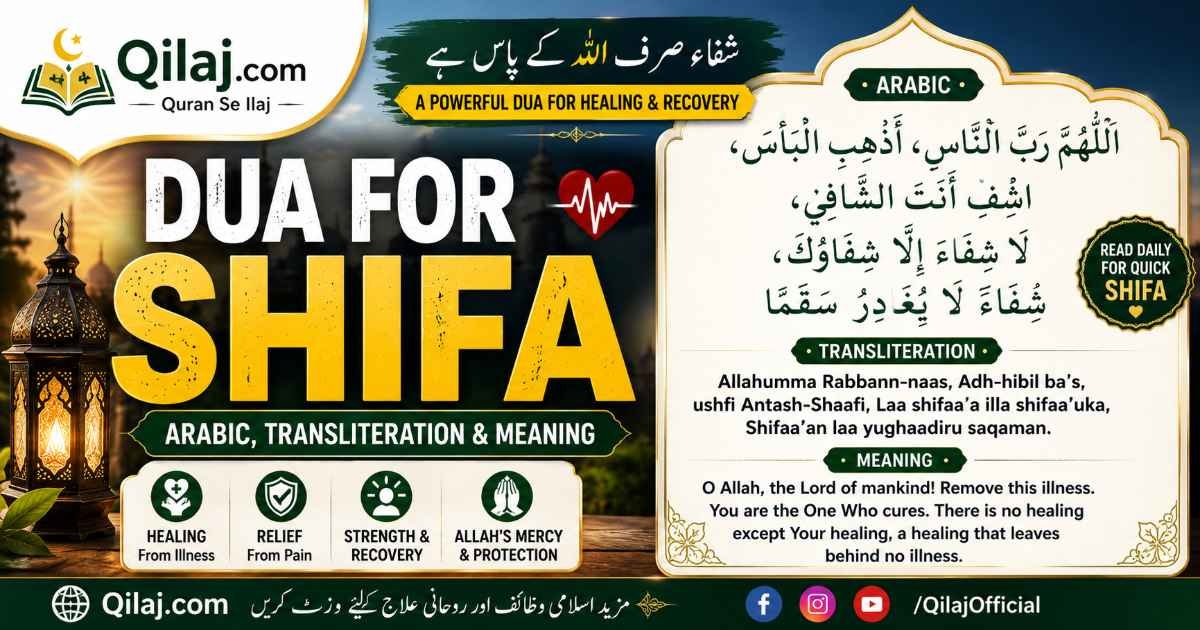
Quick answer: For shifa, Muslims can make authentic supplications asking Allah for healing and wellbeing. A well-known Prophetic dua is اللَّهُمَّ رَبَّ النَّاسِ أَذْهِبِ الْبَاسَ، اشْفِ أَنْتَ الشَّافِي — “O Allah, Lord of mankind, remove the harm and heal; You are the Healer.” Dua should be combined with appropriate medical care and should not be presented as a replacement for diagnosis or treatment.
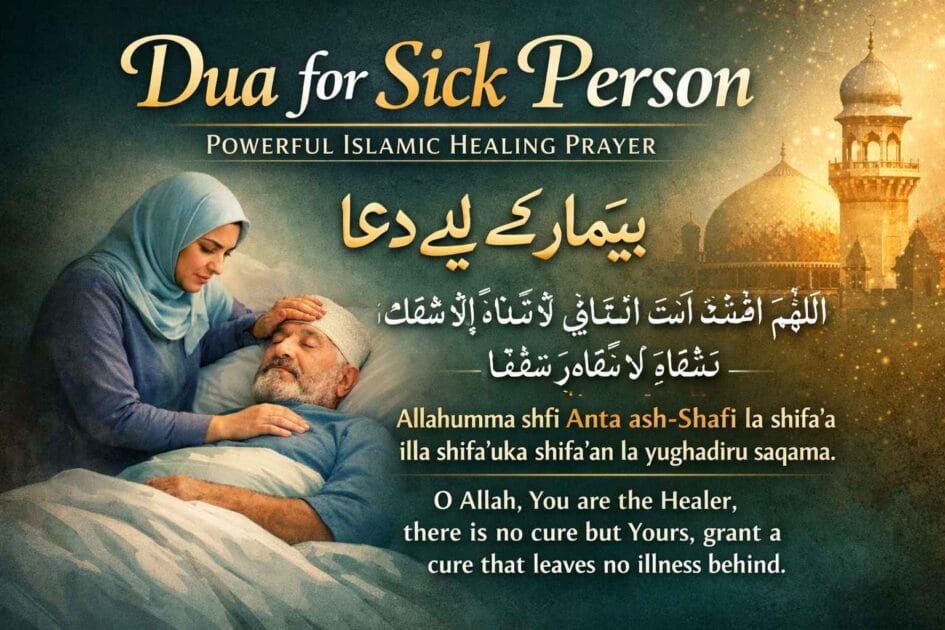
Allahumma rabban-nas, adhhib al-bas, ishfi antash-Shafi, la shifa’a illa shifa’uk, shifa’an la yughadiru saqaman.
English Meaning
O Allah, Lord of mankind, remove the harm and heal; You are the Healer. There is no healing except Your healing, a healing that leaves no illness behind.
Best Time to Read
You can read this dua when praying for a sick person, asking Allah for healing, or seeking comfort during illness. Sincerity paired with understanding is the real measure here, not an invented tally of repetitions or a guaranteed outcome.
How to Read and Practise It
Make dua sincerely and ask Allah for healing and wellbeing.
Recite the established healing supplication with understanding.
If praying for someone else, mention the person in your personal dua.
Use appropriate medical care and follow professional advice.
Avoid claiming that a specific number of repetitions guarantees a cure.
What Is Dua for Shifa?
Shifa means healing. In Islam, Allah is the ultimate source of healing, while people may use lawful medical treatment as a means. A dua for shifa can be made for yourself or another person. It can be especially comforting when illness causes fear, uncertainty or emotional strain.
For readers searching for dua for healing, the practical lesson is simple: keep the remembrance connected to the situation, learn the wording carefully, and let the meaning influence your actions. The dua is a form of turning to Allah, so it should increase humility, hope, patience and responsible behaviour rather than superstition or dependence on a formula.
Prophetic Healing Dua
The well-known supplication asks Allah, Lord of mankind, to remove harm and heal. It explicitly describes Allah as the Healer and asks for a complete healing. Learn the meaning rather than reducing the dua to a formula that is supposed to work automatically.
Dua for a Sick Person
When visiting or supporting someone who is unwell, make sincere dua for their recovery, patience and wellbeing. You can also offer practical support: help them reach a doctor, bring food if appropriate, assist with daily tasks, or simply listen. Spiritual care and practical kindness can work together.
Dua for Pain and Sickness
A person experiencing pain may ask Allah for relief using authentic supplications and personal words. Islam does not require a believer to refuse medical treatment. If symptoms are severe, sudden or worsening, timely professional care matters.
How to Keep Hope During Illness
Illness can affect mood as well as the body. Maintain prayer as able, ask Allah for strength, and avoid despair. At the same time, do not blame a sick person for their condition or tell them that insufficient faith caused the illness. Compassion and balanced advice are important.
Dua and Medical Treatment
Dua is worship, while treatment is a practical means. A responsible Muslim can do both. Do not use a spiritual article to diagnose a disease or to tell someone to stop prescribed treatment. If a treatment decision is needed, speak with a qualified clinician.
Alongside this dua, many people also recite Surah Al-Fatiha as ruqyah, based on a hadith in Sahih al-Bukhari describing a companion who recited it over someone who had been stung, after which the person recovered. This is another authentically sourced practice that complements dua for shifa.
Final Takeaway
In short, this dua for shifa – اللَّهُمَّ رَبَّ النَّاسِ أَذْهِبِ الْبَاسَ، اشْفِ أَنْتَ الشَّافِي، لَا شِفَاءَ إِلَّا شِفَاؤُكَ، شِفَاءً لَا يُغَادِرُ سَقَمًا (“Allahumma rabban-nas, adhhib al-bas, ishfi antash-Shafi, la shifa’a illa shifa’uk, shifa’an la yughadiru saqaman”), meaning “O Allah, Lord of mankind, remove the harm and heal; You are the Healer. There is no healing except Your healing, a healing that leaves no illness behind” – is easy to learn and easy to keep close. Understand it, recite it sincerely, and pair it with genuine effort rather than treating it as a shortcut.
Source and Authenticity
The Prophet’s ﷺ ruqyah for the sick, “Adhhibil-ba’sa Rabban-nas, washfi Antash-Shafi…” (Remove the harm, Lord of mankind, and heal, for You are the Healer), is recorded in both Sahih al-Bukhari (5675) and Sahih Muslim (2191), narrated by Aisha (RA), who described the Prophet ﷺ reciting it while placing his hand on a sick person. This is one of the most authentically documented healing supplications in the Sunnah.
Common Mistakes to Avoid
A serious and common mistake is treating this dua as a replacement for seeking proper medical treatment; the Prophet ﷺ himself both made ruqyah and encouraged people to seek medicine, as recorded in a hadith in Sunan Abu Dawood (“Allah has not sent down a disease except that He has also sent down its cure”). Another mistake is reciting the dua mechanically over someone without placing sincerity or intention behind it, as the hadith describes the Prophet ﷺ doing with his hand and full attention. Avoid promising a guaranteed cure to a sick person; the correct framing is hope in Allah’s mercy alongside the means He has provided.
Dua and Medical Treatment Together
Islamic teaching does not present spiritual and medical treatment as competing options. The same Prophet ﷺ who recited ruqyah over the sick also said, according to a hadith recorded in Sahih al-Bukhari, “There is no disease that Allah has created, except that He also has created its treatment,” and encouraged his companions to seek medical care. For serious or ongoing illness, this means combining consultation with a qualified doctor, taking prescribed treatment, and continuing sincere dua and ruqyah as a source of comfort, patience and spiritual reward — not as an alternative to appropriate medical attention. Presenting dua as capable of replacing necessary medical care, especially for serious conditions, goes beyond what the authentic sources themselves teach and can cause real harm.
Related Islamic Resources
Explore these related Qilaj guides for more practical Islamic learning:
Muslims may ask Allah for healing using authentic supplications for illness and personal dua. Healing ultimately comes from Allah.
Can I make dua for someone who is sick?
Yes. You can make sincere dua for a sick person and ask Allah for healing, mercy, strength and ease.
Should dua replace medical treatment?
No. Dua should not be presented as a substitute for appropriate medical care. Seek qualified medical advice while relying on Allah.
How often should I read a shifa dua?
There is no need to invent a guaranteed number of repetitions. Follow the authentic wording and guidance you have learned.
Can Quran recitation be part of seeking shifa?
Quran recitation and dua are important forms of worship, while medical symptoms should still be assessed and treated appropriately.
Can I recite dua for shifa over myself, not just for others?
Yes, self-ruqyah is encouraged. You can recite this dua over yourself while placing your hand on the area of pain, following the same method the Prophet ﷺ used for others.











 in Arabic, transliteration and English, sourced from Bukhari and Muslim, with responsible guidance on dua alongside medical care.)