
Quick answer: The dua for hajat (dua-e-hajat, حاجت کی دعا) is the supplication a Muslim makes when he has a need. The well-known Salat al-Hajah dua begins La ilaha illallahul-Halimul-Karim and is recorded in Tirmidhi (479) and Ibn Majah (1384), but hadith scholars grade its chain weak. You may still ask Allah for any lawful need in your own words, and the safest wordings are the authentic Quranic and Sahih duas listed below.
🕋 Qilaj Islamic Activity Center
Sirf 1 minute: Qurani Hal, Tasbih ya Islamic Quiz start karein
آپ کی پریشانی کیا ہے؟
📿 33 Tasbih Challenge
33 bar SubhanAllah complete karein
🧠 Islamic Quiz Challenge
Dua e Hajat in Arabic
لَا إِلَٰهَ إِلَّا اللَّهُ الْحَلِيمُ الْكَرِيمُ، سُبْحَانَ اللَّهِ رَبِّ الْعَرْشِ الْعَظِيمِ، الْحَمْدُ لِلَّهِ رَبِّ الْعَالَمِينَ، أَسْأَلُكَ مُوجِبَاتِ رَحْمَتِكَ، وَعَزَائِمَ مَغْفِرَتِكَ، وَالْغَنِيمَةَ مِنْ كُلِّ بِرٍّ، وَالسَّلَامَةَ مِنْ كُلِّ إِثْمٍ، لَا تَدَعْ لِي ذَنْبًا إِلَّا غَفَرْتَهُ، وَلَا هَمًّا إِلَّا فَرَّجْتَهُ، وَلَا حَاجَةً هِيَ لَكَ رِضًا إِلَّا قَضَيْتَهَا يَا أَرْحَمَ الرَّاحِمِينَ
Transliteration
La ilaha illallahul-Halimul-Karim. Subhanallahi Rabbil-Arshil-Azim. Alhamdu lillahi Rabbil-alamin. As’aluka mujibati rahmatik, wa aza’ima maghfiratik, wal-ghanimata min kulli birr, was-salamata min kulli ithm. La tada’ li dhanban illa ghafartah, wa la hamman illa farrajtah, wa la hajatan hiya laka ridan illa qadaytaha, ya Arhamar-rahimin.
English Meaning
There is no god but Allah, the Forbearing, the Generous. Glory be to Allah, Lord of the Mighty Throne. All praise is for Allah, Lord of the worlds. I ask You for what brings Your mercy, for Your firm forgiveness, a share of every good and safety from every sin. Leave no sin of mine except that You forgive it, no worry except that You relieve it, and no need that pleases You except that You fulfil it, O Most Merciful of those who show mercy.
Urdu Tarjuma
اللہ کے سوا کوئی معبود نہیں، جو بردبار اور کریم ہے۔ پاک ہے اللہ جو عرشِ عظیم کا رب ہے۔ تمام تعریفیں اللہ کے لیے ہیں جو سارے جہانوں کا رب ہے۔ (اے اللہ) میں تجھ سے تیری رحمت کو واجب کرنے والی چیزیں، تیری مغفرت کے پختہ اسباب، ہر نیکی میں حصہ اور ہر گناہ سے سلامتی مانگتا ہوں۔ میرا کوئی گناہ بخشے بغیر نہ چھوڑ، کوئی غم دور کیے بغیر نہ چھوڑ، اور کوئی حاجت جو تجھے پسند ہو پوری کیے بغیر نہ چھوڑ، اے سب سے زیادہ رحم کرنے والے۔
When and How to Recite Dua for Hajat
According to the narration, a person with a need performs wudu well, prays two voluntary rak’ahs, praises Allah, sends salawat on the Prophet ﷺ and then recites this dua and asks for his need. Because the chain is weak, scholars who accept it do so only as a voluntary practice (for virtuous deeds), never as an obligatory Sunnah, and no fixed number of repetitions is reported.
- Make wudu carefully – you can end it with the dua after wudu from Sahih Muslim.
- Pray two nafl rak’ahs outside the disliked (makruh) times.
- Begin with praise of Allah and Durood on the Prophet ﷺ.
- Recite the dua above or an authentic dua from the list below, then ask for your need clearly in any language.
- Take the lawful practical means and leave the result to Allah.
Authentic Duas You Can Use for Any Need
If you want wording with a stronger chain, these supplications are from the Quran and Sahih hadith and can be read for every hajat:
1. Dua of distress (Sahih al-Bukhari 6346)
لَا إِلَٰهَ إِلَّا اللَّهُ الْعَظِيمُ الْحَلِيمُ، لَا إِلَٰهَ إِلَّا اللَّهُ رَبُّ الْعَرْشِ الْعَظِيمِ، لَا إِلَٰهَ إِلَّا اللَّهُ رَبُّ السَّمَاوَاتِ وَرَبُّ الْأَرْضِ وَرَبُّ الْعَرْشِ الْكَرِيمِ
La ilaha illallahul-Azimul-Halim, la ilaha illallahu Rabbul-Arshil-Azim, la ilaha illallahu Rabbus-samawati wa Rabbul-ardi wa Rabbul-Arshil-Karim. – There is no god but Allah, the Mighty, the Forbearing; there is no god but Allah, Lord of the Mighty Throne; there is no god but Allah, Lord of the heavens, Lord of the earth and Lord of the Noble Throne. The Prophet ﷺ used to say this at times of distress.
2. Dua of Prophet Yunus (Quran 21:87)
La ilaha illa anta subhanaka inni kuntu minaz-zalimin. The Prophet ﷺ said that no Muslim calls upon Allah with it for anything except that he is answered (Tirmidhi 3505, graded sahih). Read the full explanation in our guide to the Dua of Yunus (Ayat-e-Karima).
3. Dua of Prophet Musa (Quran 28:24)
رَبِّ إِنِّي لِمَا أَنْزَلْتَ إِلَيَّ مِنْ خَيْرٍ فَقِيرٌ
Rabbi inni lima anzalta ilayya min khayrin faqir. – My Lord, I am in need of whatever good You send down to me. A short Quranic dua that suits work, rizq and every lawful need.
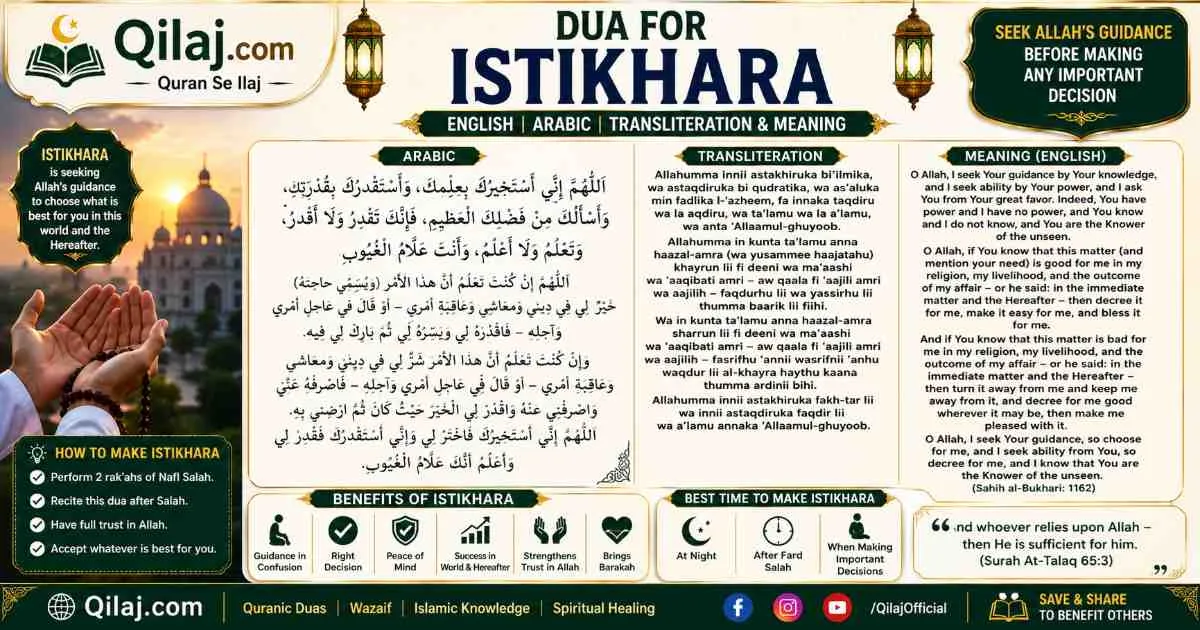
For specific needs, see also the dua for examination, the Rizq mein barkat ki dua, the dua for relief from debt and the Istikhara dua when you need guidance in a decision.
Is Salat al-Hajah Authentic?
Imam at-Tirmidhi himself wrote that there is criticism (maqal) in this chain because the narrator Fa’id ibn Abdur-Rahman is weak in hadith, and modern editors such as Darussalam grade both the Tirmidhi and Ibn Majah narrations da’if. Some scholars allow acting on it as a voluntary prayer; others prefer to avoid it. Either way, it is not correct to call it a guaranteed or compulsory amal. What is fully authentic is the general command to ask Allah: “Call upon Me; I will respond to you” (Quran 40:60), and the Prophet ﷺ said, “Dua is worship” (Abu Dawud 1479, sahih).
Best Times for Dua for a Need
- Between the adhan and iqamah – such dua is not rejected (Abu Dawud 521, sahih). Check today’s timings on our prayer times page.
- In sujood during your own nafl prayer.
- In the last third of the night, for example after Tahajjud prayer.
- When fasting, at the time of breaking the fast (Tirmidhi 3598, hasan).
Common Mistakes
- Promising that a set number of readings will “100% fulfil” a wish – there is no such text.
- Asking for something haram or for harm to someone innocent.
- Giving up quickly; the Prophet ﷺ warned against saying “I prayed but was not answered.”
- Leaving practical effort – dua and lawful action go together.
خلاصہ: حاجت کی دعا (صلاۃ الحاجہ) ترمذی اور ابن ماجہ میں آئی ہے لیکن اس کی سند ضعیف ہے۔ اپنی ہر جائز حاجت اللہ سے اپنی زبان میں مانگیں اور قرآن و صحیح حدیث کی دعائیں پڑھیں، جیسے آیتِ کریمہ اور کرب کی دعا۔
Related Reading
FAQ
What is dua for hajat?
It is a supplication for a specific lawful need. The well-known Salat al-Hajah dua is reported in Tirmidhi 479 and Ibn Majah 1384, but you may also ask Allah in your own words.
Is Salatul Hajat authentic?
Its chain is graded weak because of the narrator Fa’id ibn Abdur-Rahman. Some scholars permit it as a voluntary prayer, but it should not be called compulsory or guaranteed.
How many times should I read dua e hajat?
No fixed number is reported. Read it with attention and repeat your request sincerely as you wish.
Can I make dua for hajat in Urdu or English?
Yes. Personal dua outside the fixed parts of salah can be made in any language you understand.
Which authentic dua can I read for a need?
The dua of distress in Sahih al-Bukhari 6346, the Dua of Yunus (Quran 21:87) and the dua of Musa (Quran 28:24) are authentic choices.
Source & review: References: Quran (quran.com), Hadith (sunnah.com: Tirmidhi 479, Ibn Majah 1384, Bukhari 6346, Tirmidhi 3505). Content reviewed by Qilaj editorial team.