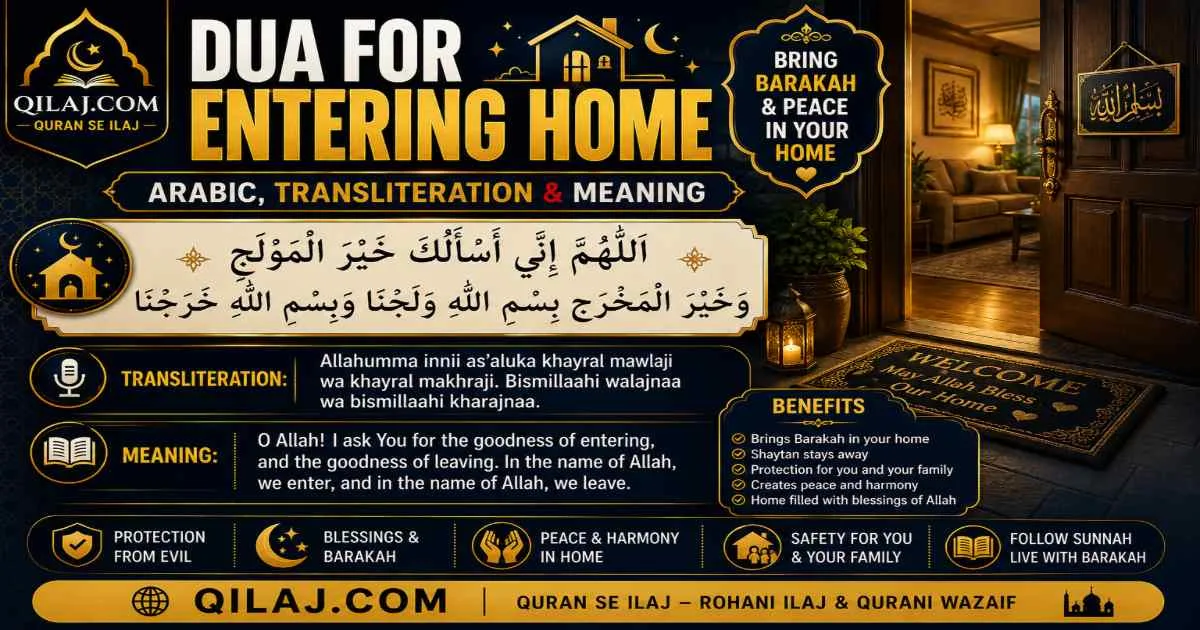
The authentic Sunnah when entering home is to say بِسْمِ اللَّهِ (Bismillah) and greet the family with salam. The Prophet ﷺ said that when a person mentions Allah on entering his house and at his meal, Shaytan says to his companions, “No place to stay and no dinner for you” (Sahih Muslim 2018). A longer, widely taught dua is Allahumma inni as’aluka khayral-mawlaji wa khayral-makhraji, Bismillahi walajna wa Bismillahi kharajna wa ‘alallahi Rabbina tawakkalna (Abu Dawud 5096), though its chain is graded weak.
🕋 Qilaj Islamic Activity Center
Sirf 1 minute: Qurani Hal, Tasbih ya Islamic Quiz start karein
آپ کی پریشانی کیا ہے؟
📿 33 Tasbih Challenge
33 bar SubhanAllah complete karein
🧠 Islamic Quiz Challenge
Dua for Entering Home – Quick Reference
1. Bismillah (Sahih Muslim 2018)
بِسْمِ اللَّهِ
Transliteration: Bismillah. English: In the name of Allah. اردو: اللہ کے نام سے۔
When to recite: As you step into your home, then say “As-salamu ‘alaykum” to the people inside.
2. The Longer Entering-Home Dua (Abu Dawud 5096)
اللَّهُمَّ إِنِّي أَسْأَلُكَ خَيْرَ الْمَوْلِجِ وَخَيْرَ الْمَخْرَجِ، بِسْمِ اللَّهِ وَلَجْنَا، وَبِسْمِ اللَّهِ خَرَجْنَا، وَعَلَى اللَّهِ رَبِّنَا تَوَكَّلْنَا
Transliteration: Allahumma inni as’aluka khayral-mawlaji wa khayral-makhraj. Bismillahi walajna, wa Bismillahi kharajna, wa ‘alallahi Rabbina tawakkalna.
English meaning: O Allah, I ask You for the best entering and the best leaving. In the name of Allah we enter, in the name of Allah we leave, and upon Allah, our Lord, we rely.
اردو ترجمہ: اے اللہ! میں تجھ سے بہتر داخل ہونے اور بہتر نکلنے کا سوال کرتا ہوں۔ اللہ کے نام سے ہم داخل ہوئے، اللہ کے نام سے ہم نکلے، اور اللہ، اپنے رب پر ہم نے بھروسہ کیا۔
Authenticity note: This narration (from Abu Malik al-Ash’ari) ends with “then let him greet his family”. Al-Albani graded its chain da’if (weak). Its meaning is sound, so reciting it is fine as a general dua, but the confirmed Sunnah is mentioning Allah’s name (Muslim 2018) and giving salam.
Dua for Leaving Home (Sahih)
بِسْمِ اللَّهِ تَوَكَّلْتُ عَلَى اللَّهِ لاَ حَوْلَ وَلاَ قُوَّةَ إِلاَّ بِاللَّهِ
Transliteration: Bismillah, tawakkaltu ‘alallah, la hawla wa la quwwata illa billah.
English meaning: In the name of Allah, I place my trust in Allah; there is no power and no strength except with Allah.
اردو ترجمہ: اللہ کے نام سے، میں نے اللہ پر بھروسہ کیا، اللہ کے سوا نہ کوئی طاقت ہے نہ قوت۔
Source: Sunan Abi Dawud 5095 (Anas ibn Malik), graded sahih by al-Albani. If you are setting off on a trip, also recite the travel dua.
گھر میں داخل ہونے کی دعا (اردو خلاصہ): گھر میں داخل ہوتے وقت “بِسْمِ اللَّهِ” کہیں اور گھر والوں کو سلام کریں (صحیح مسلم 2018)۔ “اللَّهُمَّ إِنِّي أَسْأَلُكَ خَيْرَ الْمَوْلِجِ…” والی دعا ابو داود میں ہے مگر سند ضعیف ہے۔ گھر سے نکلتے وقت “بِسْمِ اللَّهِ تَوَكَّلْتُ عَلَى اللَّهِ…” پڑھیں جو صحیح ہے۔
Say Salam When You Enter
The Quran teaches: “When you enter houses, greet one another with a greeting from Allah, blessed and good” (Surah An-Nur 24:61). Say salam clearly so your family can reply. If the house is empty, you can still say Bismillah and remember Allah.
A Simple Daily Home Routine
- Leaving: Bismillah, tawakkaltu ‘alallah, la hawla wa la quwwata illa billah.
- Entering: Bismillah, then salam to the family.
- At meals: dua before eating and dua after eating.
- At night: the dua before sleeping and Ayat al-Kursi.
For broader household protection, read our guide on home safety dua and the morning and evening azkar. A peaceful home is also built through salah, kind words and good manners with family, including dua for parents.
Common Mistakes to Avoid
- Remembering the dua only after moving house instead of making it a daily habit.
- Entering silently without salam.
- Presenting a weak narration as if it were in Sahih Muslim.
- Thinking the dua alone protects from every difficulty – it is one part of a God-conscious home.
FAQ
What is the dua for entering the home?
Say Bismillah when entering and give salam (Sahih Muslim 2018). The longer dua Allahumma inni as’aluka khayral-mawlaji… is in Abu Dawud 5096 with a weak chain.
Ghar mein dakhil hone ki dua kya hai?
Ghar mein dakhil hote waqt Bismillah kahein aur ghar walon ko salam karein. Yahi sahih sunnat hai.
What is the dua for leaving the house?
Bismillah, tawakkaltu ‘alallah, la hawla wa la quwwata illa billah (Abu Dawud 5095, sahih).
Should I say salam if nobody is home?
Yes, you can still say Bismillah and salam, as the Quran tells us to greet when entering houses (24:61).
Related Reading
Source & review: Sahih Muslim 2018, Abu Dawud 5096 (da’if), Abu Dawud 5095 (sahih), Quran 24:61. References: Quran (quran.com), Hadith (sunnah.com). Content reviewed by Qilaj editorial team.