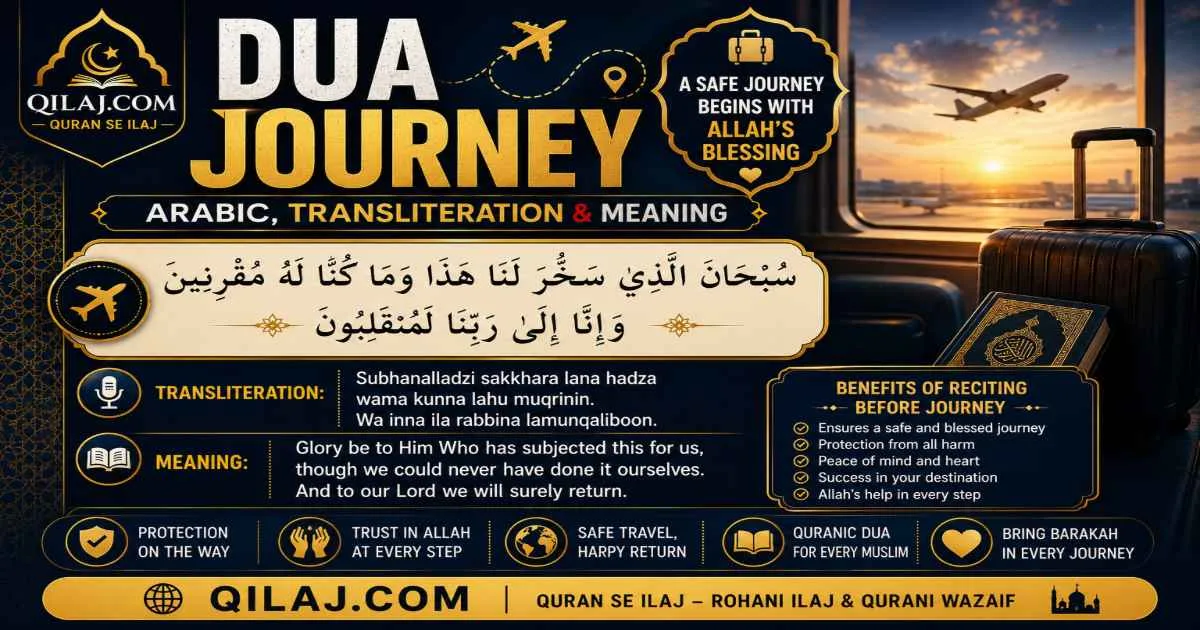
The Sunnah travel dua begins with “Allahu Akbar” three times, then سُبْحَانَ الَّذِي سَخَّرَ لَنَا هَذَا وَمَا كُنَّا لَهُ مُقْرِنِينَ وَإِنَّا إِلَى رَبِّنَا لَمُنْقَلِبُونَ – “Glory be to the One who subjected this to us; we could never have done it ourselves, and to our Lord we will surely return.” The Prophet ﷺ recited it when he mounted his ride for a journey, followed by a longer request for piety, ease and protection (Sahih Muslim 1342). It suits travel by car, bus, train or plane.
🕋 Qilaj Islamic Activity Center
Sirf 1 minute: Qurani Hal, Tasbih ya Islamic Quiz start karein
آپ کی پریشانی کیا ہے؟
📿 33 Tasbih Challenge
33 bar SubhanAllah complete karein
🧠 Islamic Quiz Challenge
Full Travel Dua – Arabic Text
Say اللَّهُ أَكْبَرُ (Allahu Akbar) three times, then:
سُبْحَانَ الَّذِي سَخَّرَ لَنَا هَذَا وَمَا كُنَّا لَهُ مُقْرِنِينَ وَإِنَّا إِلَى رَبِّنَا لَمُنْقَلِبُونَ، اللَّهُمَّ إِنَّا نَسْأَلُكَ فِي سَفَرِنَا هَذَا الْبِرَّ وَالتَّقْوَى، وَمِنَ الْعَمَلِ مَا تَرْضَى، اللَّهُمَّ هَوِّنْ عَلَيْنَا سَفَرَنَا هَذَا وَاطْوِ عَنَّا بُعْدَهُ، اللَّهُمَّ أَنْتَ الصَّاحِبُ فِي السَّفَرِ وَالْخَلِيفَةُ فِي الأَهْلِ، اللَّهُمَّ إِنِّي أَعُوذُ بِكَ مِنْ وَعْثَاءِ السَّفَرِ وَكَآبَةِ الْمَنْظَرِ وَسُوءِ الْمُنْقَلَبِ فِي الْمَالِ وَالأَهْلِ
Transliteration
Subhanalladhi sakhkhara lana hadha wa ma kunna lahu muqrinin, wa inna ila Rabbina lamunqalibun. Allahumma inna nas’aluka fi safarina hadhal-birra wat-taqwa, wa minal-‘amali ma tarda. Allahumma hawwin ‘alayna safarana hadha watwi ‘anna bu’dah. Allahumma antas-sahibu fis-safari wal-khalifatu fil-ahl. Allahumma inni a’udhu bika min wa’tha’is-safari wa ka’abatil-manzari wa su’il-munqalabi fil-mali wal-ahl.
English Meaning
Glory be to the One who has subjected this to us, and we could never have accomplished it ourselves, and to our Lord we will surely return. O Allah, we ask You on this journey for righteousness and piety, and for deeds that please You. O Allah, make this journey easy for us and shorten its distance. O Allah, You are the Companion on the journey and the Guardian of the family. O Allah, I seek refuge in You from the hardships of travel, from distressing sights, and from an evil return to my wealth and family.
اردو ترجمہ
پاک ہے وہ ذات جس نے اسے ہمارے قابو میں کر دیا، حالانکہ ہم اسے قابو میں کرنے والے نہ تھے، اور بے شک ہم اپنے رب کی طرف لوٹنے والے ہیں۔ اے اللہ! ہم اس سفر میں تجھ سے نیکی اور تقویٰ کا سوال کرتے ہیں، اور ایسے عمل کا جسے تو پسند کرے۔ اے اللہ! ہمارا یہ سفر ہم پر آسان کر دے اور اس کی دوری کو ہمارے لیے لپیٹ دے۔ اے اللہ! تو ہی سفر میں ساتھی ہے اور گھر والوں میں نگہبان ہے۔ اے اللہ! میں تیری پناہ چاہتا ہوں سفر کی مشقت سے، برے منظر سے، اور مال و اہل میں برے انجام کے ساتھ لوٹنے سے۔
Short Version (Quran 43:13-14)
If you cannot memorise the full dua yet, the opening part comes directly from Surah Az-Zukhruf 43:13-14: Subhanalladhi sakhkhara lana hadha wa ma kunna lahu muqrinin, wa inna ila Rabbina lamunqalibun. Start with this and add the rest over time.
Dua When Returning From a Journey
On the way back, the Prophet ﷺ said the same dua and added (Sahih Muslim 1342):
آيِبُونَ تَائِبُونَ عَابِدُونَ لِرَبِّنَا حَامِدُونَ
Transliteration: Ayibuna, ta’ibuna, ‘abiduna, li-Rabbina hamidun.
English: We return, repenting, worshipping and praising our Lord.
اردو ترجمہ: ہم لوٹنے والے ہیں، توبہ کرنے والے، عبادت کرنے والے اور اپنے رب کی حمد کرنے والے ہیں۔
Other Sunnah Duas During Travel
- Going up and down: the companions said “Allahu Akbar” when climbing and “Subhan Allah” when descending (Sahih al-Bukhari 2993).
- When stopping at a place (hotel, rest area): A’udhu bi-kalimatillahit-tammati min sharri ma khalaq – “I seek refuge in Allah’s perfect words from the evil of what He created.” Whoever says it is not harmed until he leaves that place (Sahih Muslim 2708).
- Leaving home: Bismillah, tawakkaltu ‘alallah, la hawla wa la quwwata illa billah (Abu Dawud 5095) – details in our entering and leaving home dua guide.
How to Practise the Travel Dua
- Check your tickets, documents, vehicle and route – preparation is part of tawakkul.
- When seated in the car, bus or plane, say Allahu Akbar three times and recite the travel dua.
- Remember your family in your dua; Allah is “the Guardian of the family”.
- Drive safely: seat belt, sensible speed and rest when tired.
- On return, add Ayibuna ta’ibuna… and thank Allah.
Traveller’s prayer rules (qasr) are explained in Safar mein Qasr Namaz, and you can check salah times at your destination on Prayer Times Worldwide and the Qibla Direction Finder.
Common Mistakes to Avoid
- Reciting only at the start of a long trip and forgetting it for later legs or the return.
- Adding phrases from unverified sources and calling them part of the Sunnah wording.
- Treating the dua as a replacement for safe driving and precautions.
FAQ
What is the dua for travelling?
Say Allahu Akbar three times, then Subhanalladhi sakhkhara lana hadha wa ma kunna lahu muqrinin wa inna ila Rabbina lamunqalibun, followed by the rest of the dua in Sahih Muslim 1342.
Safar ki dua kab parhni chahiye?
Jab sawari (car, bus, jahaz) par baith jayein to safar ki dua parhein, aur wapsi par Ayibuna ta’ibuna ‘abiduna li-Rabbina hamidun ka izafa karein.
Can I read the travel dua in a car or plane?
Yes. The dua applies to any means of transport, including cars, buses, trains and planes.
Can I read the travel dua from my phone?
Yes. Reading it from a phone or card while you memorise it is fine; understanding and sincerity matter most.
Related Reading
Source & review: Sahih Muslim 1342 (Ibn Umar), Quran 43:13-14, Bukhari 2993, Muslim 2708, Abu Dawud 5095. References: Quran (quran.com), Hadith (sunnah.com). Content reviewed by Qilaj editorial team.