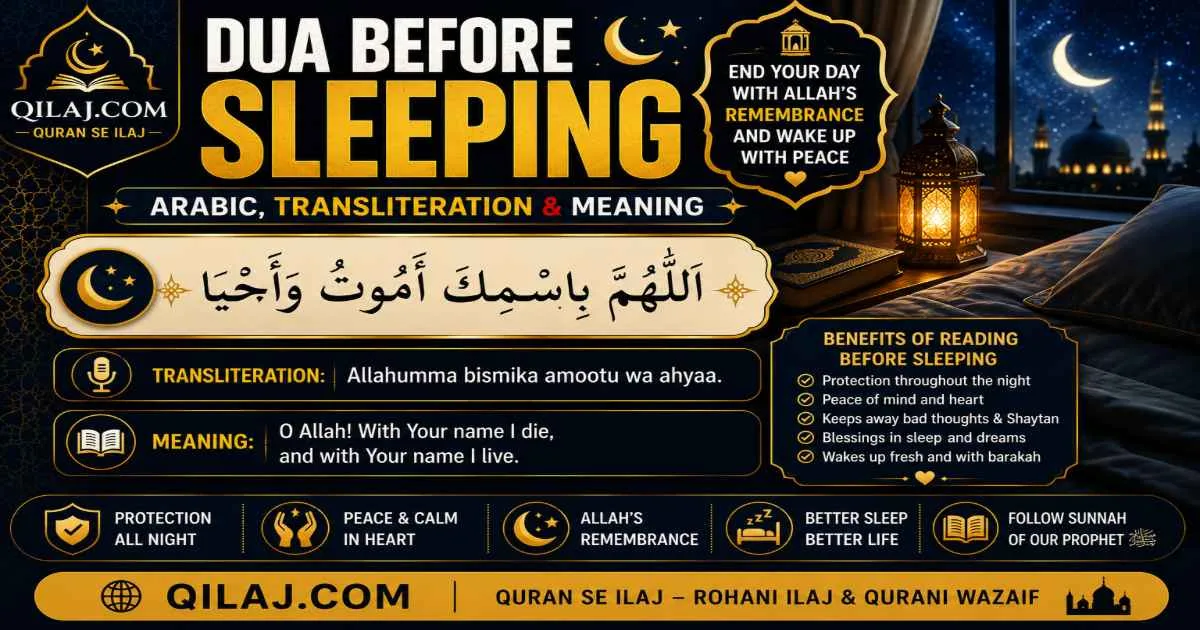
The Sunnah dua before sleeping is بِاسْمِكَ اللَّهُمَّ أَمُوتُ وَأَحْيَا (Bismika Allahumma amutu wa ahya), “In Your name, O Allah, I die and I live.” The Prophet ﷺ said it when lying down at night, and on waking he said Alhamdu lillahil-ladhi ahyana ba’da ma amatana wa ilayhin-nushur (Sahih al-Bukhari 6324). The bedtime routine also includes Ayat al-Kursi, the last two verses of Surah Al-Baqarah and the three Quls.
🕋 Qilaj Islamic Activity Center
Sirf 1 minute: Qurani Hal, Tasbih ya Islamic Quiz start karein
آپ کی پریشانی کیا ہے؟
📿 33 Tasbih Challenge
33 bar SubhanAllah complete karein
🧠 Islamic Quiz Challenge
Dua Before Sleeping – Quick Reference
بِاسْمِكَ اللَّهُمَّ أَمُوتُ وَأَحْيَا
Transliteration: Bismika Allahumma amutu wa ahya.
English meaning: In Your name, O Allah, I die and I live.
اردو ترجمہ: اے اللہ! تیرے ہی نام کے ساتھ میں مرتا (سوتا) ہوں اور جیتا (جاگتا) ہوں۔
When to recite: When you lie down in bed at night or for a daytime nap. Sleep is called a “minor death”, so the dua places your night in Allah’s care.
Dua After Waking Up
الْحَمْدُ لِلَّهِ الَّذِي أَحْيَانَا بَعْدَ مَا أَمَاتَنَا وَإِلَيْهِ النُّشُورُ
Transliteration: Alhamdu lillahil-ladhi ahyana ba’da ma amatana wa ilayhin-nushur.
English meaning: All praise is for Allah who gave us life after causing us to die, and to Him is the resurrection.
اردو ترجمہ: تمام تعریفیں اللہ کے لیے ہیں جس نے ہمیں موت (نیند) کے بعد زندگی دی، اور اسی کی طرف اٹھ کر جانا ہے۔
The Sunnah Bedtime Routine
- Wudu if convenient – our wudu guide shows the steps, and the dua after wudu is a lovely addition.
- Three Quls: each night the Prophet ﷺ cupped his hands, blew into them, recited Surah Al-Ikhlas, Al-Falaq and An-Nas, and wiped over his body, starting with the head, face and front, three times (Sahih al-Bukhari 5017).
- Ayat al-Kursi (2:255): whoever recites it at bedtime has a guardian from Allah, and no devil comes near him until morning (Sahih al-Bukhari 2311). Read more on Ayatul Kursi for protection.
- Last two verses of Al-Baqarah (2:285-286): “whoever recites them at night, they will suffice him” (Sahih al-Bukhari 5009). See Surah Baqarah last 2 ayat.
- Lie on your right side and say Bismika Allahumma amutu wa ahya.
Many people also recite Surah Al-Mulk at night because of narrations about its protection in the grave; this is a separate practice from the sleeping dua.
سونے کی دعا (اردو خلاصہ): سونے سے پہلے “بِاسْمِكَ اللَّهُمَّ أَمُوتُ وَأَحْيَا” پڑھیں، تینوں قل پڑھ کر ہاتھوں پر پھونک کر جسم پر پھیریں، آیت الکرسی اور سورہ بقرہ کی آخری دو آیات پڑھیں، اور جاگنے پر “الْحَمْدُ لِلَّهِ الَّذِي أَحْيَانَا…” کہیں۔ مزید تفصیل کے لیے سونے کی دعا اور مسنون اعمال دیکھیں۔
If You Cannot Sleep or Have Bad Dreams
If you wake at night, remember Allah and make personal dua – the last part of the night is a special time for Tahajjud. For restlessness, see our sleep problems dua, and for nightmares the bad dreams dua. Ongoing insomnia can have medical causes, so speak to a doctor if it lasts more than a few weeks.
Teaching Children the Sleeping Dua
Say the dua together each night and keep the explanation simple: Allah looks after us while we sleep. Start with Bismika Allahumma amutu wa ahya and the three Quls, then add Ayat al-Kursi as they grow. Consistency matters more than memorising a long list at once.
Common Mistakes to Avoid
- Rushing through the azkar without thinking about their meaning.
- Skipping the routine on tired nights – a short version is better than none.
- Exaggerating the reward: the hadith on Ayat al-Kursi describes protection from Shaytan until morning, not a guarantee against every worldly harm.
FAQ
What is the dua before sleeping?
Bismika Allahumma amutu wa ahya, meaning “In Your name, O Allah, I die and I live” (Sahih al-Bukhari 6324).
Sone se pehle kya parhna chahiye?
Sone ki dua, Ayat al-Kursi, Surah Baqarah ki aakhri do ayat aur teeno Qul parh kar haathon par phoonk kar jism par pherna sunnat hai.
What is the dua after waking up?
Alhamdu lillahil-ladhi ahyana ba’da ma amatana wa ilayhin-nushur – praise be to Allah who gave us life after death, and to Him is the return.
Is it okay to fall asleep before finishing the azkar?
Yes, there is no sin in it. Try to recite the azkar earlier in your bedtime routine, before you feel too drowsy.
Related Reading
Source & review: Sahih al-Bukhari 6324, Bukhari 5017, Bukhari 2311, Bukhari 5009. References: Quran (quran.com), Hadith (sunnah.com). Content reviewed by Qilaj editorial team.