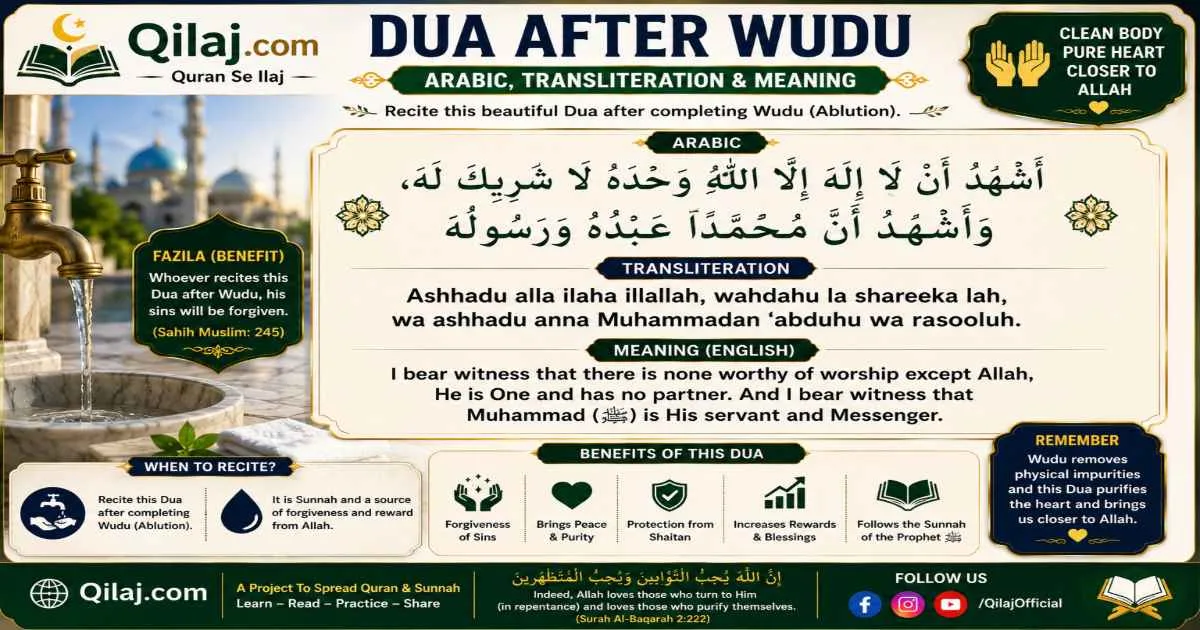
Quick answer: The authentic dua after wudu (wazu ke baad ki dua, وضو کے بعد کی دعا) is the testimony أَشْهَدُ أَنْ لَا إِلَٰهَ إِلَّا اللَّهُ وَحْدَهُ لَا شَرِيكَ لَهُ، وَأَشْهَدُ أَنَّ مُحَمَّدًا عَبْدُهُ وَرَسُولُهُ. According to Sahih Muslim (234), whoever performs wudu well and then says it, the eight gates of Paradise are opened for him to enter by whichever he wishes. Tirmidhi (55) adds the short dua Allahummaj-‘alni minat-tawwabin, waj-‘alni minal-mutatahhirin.
🕋 Qilaj Islamic Activity Center
Sirf 1 minute: Qurani Hal, Tasbih ya Islamic Quiz start karein
آپ کی پریشانی کیا ہے؟
📿 33 Tasbih Challenge
33 bar SubhanAllah complete karein
🧠 Islamic Quiz Challenge
Dua After Wudu in Arabic
أَشْهَدُ أَنْ لَا إِلَٰهَ إِلَّا اللَّهُ وَحْدَهُ لَا شَرِيكَ لَهُ، وَأَشْهَدُ أَنَّ مُحَمَّدًا عَبْدُهُ وَرَسُولُهُ
Transliteration
Ashhadu an la ilaha illallahu wahdahu la sharika lah, wa ashhadu anna Muhammadan ‘abduhu wa rasuluh.
English Meaning
I bear witness that there is no god but Allah alone, without any partner, and I bear witness that Muhammad is His servant and Messenger.
Urdu Tarjuma
میں گواہی دیتا ہوں کہ اللہ کے سوا کوئی معبود نہیں، وہ اکیلا ہے، اس کا کوئی شریک نہیں، اور میں گواہی دیتا ہوں کہ محمد ﷺ اس کے بندے اور رسول ہیں۔
Source: Narrated by ‘Uqbah ibn ‘Amir from ‘Umar ibn al-Khattab – Sahih Muslim 234.
The Addition from Tirmidhi
اللَّهُمَّ اجْعَلْنِي مِنَ التَّوَّابِينَ وَاجْعَلْنِي مِنَ الْمُتَطَهِّرِينَ
Transliteration: Allahummaj-‘alni minat-tawwabin, waj-‘alni minal-mutatahhirin.
English: O Allah, make me among those who repent often and make me among those who purify themselves.
اردو: اے اللہ! مجھے بہت توبہ کرنے والوں میں سے بنا دے اور مجھے خوب پاکیزگی حاصل کرنے والوں میں سے بنا دے۔
This addition is in Jami’ at-Tirmidhi 55. Hadith editors differ on its chain – the Darussalam edition grades this route weak, while other scholars such as al-Albani accepted the addition through supporting routes. It is therefore recommended, not obligatory, and the core Sahih Muslim wording is the part to make sure you never miss.
When and How to Recite It
- Complete wudu properly – washing face, arms to the elbows, wiping the head and washing the feet, as commanded in Quran 5:6. Our step-by-step Wazu ka tarika covers the faraiz and sunnahs.
- Right after finishing, recite the shahadah dua above (facing the qiblah if easy).
- Add the Tirmidhi dua if you wish.
- Then go to salah – and when you reach the masjid, read the dua for entering the mosque.
Raising a finger or looking at the sky while reading it is mentioned in some weaker reports; it is not required. The dua is said once – no special count is reported.
Why This Dua Matters
Wudu cleans the body; the shahadah after it renews the heart. The hadith links a correctly performed wudu with this testimony to the opening of all eight gates of Jannah, which shows how much reward Allah has placed in a two-line habit repeated five times a day. Combining it with the azkar after namaz keeps a Muslim in remembrance from purification to the end of prayer.
Common Mistakes
- Rushing wudu (leaving heels or elbows dry) and then relying on the dua – the hadith says “performs wudu well”.
- Thinking wudu is invalid if the dua is forgotten – it is Sunnah, wudu is still valid.
- Wasting water; moderation is part of the Sunnah.
- Not knowing what breaks wudu – read Wazu todne wali cheezen, and the rules of tayammum when water cannot be used.
خلاصہ: وضو کے بعد «أَشْهَدُ أَنْ لَا إِلَٰهَ إِلَّا اللَّهُ وَحْدَهُ لَا شَرِيكَ لَهُ، وَأَشْهَدُ أَنَّ مُحَمَّدًا عَبْدُهُ وَرَسُولُهُ» پڑھیں (صحیح مسلم 234)۔ اس پر جنت کے آٹھوں دروازے کھولے جانے کی بشارت ہے۔
Related Reading
FAQ
What is the dua after wudu?
Ashhadu an la ilaha illallahu wahdahu la sharika lah, wa ashhadu anna Muhammadan ‘abduhu wa rasuluh (Sahih Muslim 234).
What is the reward for the dua after wudu?
Sahih Muslim 234 says the eight gates of Paradise are opened for the person to enter by whichever he wishes.
Is Allahummaj-‘alni minat-tawwabin authentic?
It is reported in Tirmidhi 55. Editors differ on its chain, so it is a recommended addition, while the Sahih Muslim shahadah is the core dua.
Is wudu valid if I forget the dua?
Yes. The dua is Sunnah; wudu depends on its obligatory acts.
Can I read the dua after wudu if I am not praying immediately?
Yes. It is linked to completing wudu, not only to the next prayer.
Source & review: References: Quran (quran.com 5:6), Hadith (sunnah.com: Muslim 234, Tirmidhi 55). Content reviewed by Qilaj editorial team.