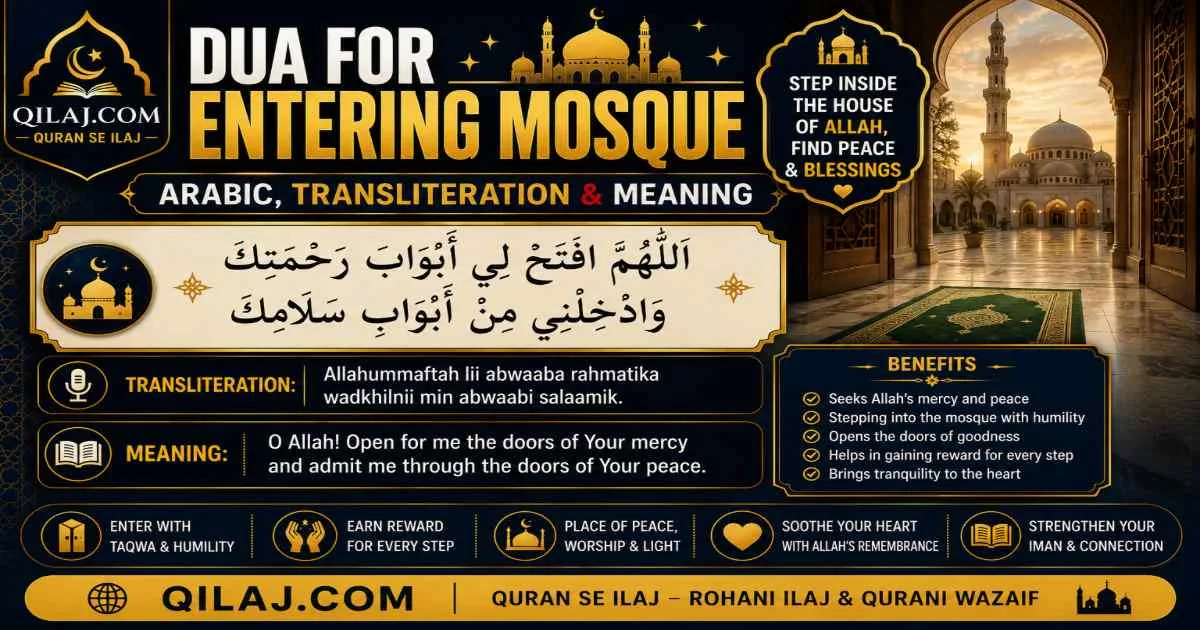
The dua for entering the mosque is اللَّهُمَّ افْتَحْ لِي أَبْوَابَ رَحْمَتِكَ (Allahumma iftah li abwaba rahmatik), “O Allah, open for me the doors of Your mercy.” When leaving, say اللَّهُمَّ إِنِّي أَسْأَلُكَ مِنْ فَضْلِكَ (Allahumma inni as’aluka min fadlik), “O Allah, I ask You of Your bounty” (Sahih Muslim 713). Abu Dawud 465 adds sending salam on the Prophet ﷺ before each dua. Enter with the right foot and pray two rak’at before sitting.
🕋 Qilaj Islamic Activity Center
Sirf 1 minute: Qurani Hal, Tasbih ya Islamic Quiz start karein
آپ کی پریشانی کیا ہے؟
📿 33 Tasbih Challenge
33 bar SubhanAllah complete karein
🧠 Islamic Quiz Challenge
Dua for Entering Mosque – Quick Reference
Entering the Masjid
اللَّهُمَّ افْتَحْ لِي أَبْوَابَ رَحْمَتِكَ
Transliteration: Allahumma-ftah li abwaba rahmatik.
English meaning: O Allah, open for me the doors of Your mercy.
اردو ترجمہ: اے اللہ! میرے لیے اپنی رحمت کے دروازے کھول دے۔
When to recite: At the door of the mosque as you step in with your right foot.
Leaving the Masjid
اللَّهُمَّ إِنِّي أَسْأَلُكَ مِنْ فَضْلِكَ
Transliteration: Allahumma inni as’aluka min fadlik.
English meaning: O Allah, I ask You of Your bounty.
اردو ترجمہ: اے اللہ! میں تجھ سے تیرے فضل کا سوال کرتا ہوں۔
When to recite: As you step out with your left foot. Inside the mosque we ask for mercy; going back to work and daily life we ask for Allah’s bounty (fadl), including halal rizq.
Salam on the Prophet ﷺ First
Abu Dawud 465 (graded sahih by al-Albani) teaches greeting the Prophet ﷺ before the dua. A common wording is Bismillah, was-salatu was-salamu ‘ala Rasulillah, followed by Allahumma-ftah li abwaba rahmatik. For the full salawat, see Darood Ibrahim.
مسجد میں داخل ہونے کی دعا (اردو خلاصہ): دایاں پاؤں پہلے رکھیں، نبی ﷺ پر سلام بھیجیں اور “اللَّهُمَّ افْتَحْ لِي أَبْوَابَ رَحْمَتِكَ” پڑھیں۔ نکلتے وقت بایاں پاؤں پہلے نکالیں اور “اللَّهُمَّ إِنِّي أَسْأَلُكَ مِنْ فَضْلِكَ” پڑھیں۔ بیٹھنے سے پہلے دو رکعت تحیۃ المسجد پڑھیں۔
Mosque Etiquette Step by Step
- Come in wudu – see the wudu method and dua after wudu.
- Enter with the right foot. Imam al-Bukhari titled a chapter “Starting with the right foot when entering the mosque”, citing that the Prophet ﷺ liked to begin with the right in all good things (Sahih al-Bukhari 426).
- Recite the entering dua after salam on the Prophet ﷺ.
- Pray Tahiyyat al-Masjid: “If any of you enters a mosque, he should pray two rak’at before sitting” (Sahih al-Bukhari 444). If the iqamah has been called, join the congregation instead.
- Keep the mosque calm: phone on silent, low voice, no pushing through rows.
- Leave with the left foot and recite the leaving dua.
Check jama’ah times on Prayer Times Worldwide or the Jummah prayer time guide, and after salah recite the azkar after namaz. Hearing the adhan? Learn the reply to the azan and the dua after it.
Teaching Children Mosque Duas
Say the dua quietly with your child at the door, explain that the mosque is a house of Allah’s mercy, and praise them for walking calmly. Short, positive lessons work better than harsh correction. The dua for entering home and travel dua make good next steps.
Common Mistakes to Avoid
- Mixing up the two duas – mercy (rahmah) on entering, bounty (fadl) on leaving.
- Sitting down and chatting before praying Tahiyyat al-Masjid.
- Loud phone calls or business deals inside the prayer hall.
FAQ
What is the dua for entering the mosque?
Allahumma-ftah li abwaba rahmatik – O Allah, open for me the doors of Your mercy (Sahih Muslim 713).
What is the dua for leaving the mosque?
Allahumma inni as’aluka min fadlik – O Allah, I ask You of Your bounty (Sahih Muslim 713).
Masjid mein dakhil hone ki dua kya hai?
Dayan paon andar rakh kar Nabi ﷺ par salam bhejein aur Allahumma-ftah li abwaba rahmatik parhein.
Should I pray before sitting in the mosque?
Yes. Pray two rak’at Tahiyyat al-Masjid before sitting (Sahih al-Bukhari 444), unless the congregational prayer is starting.
Related Reading
Source & review: Sahih Muslim 713, Abu Dawud 465, Bukhari 444, Bukhari 426. References: Quran (quran.com), Hadith (sunnah.com). Content reviewed by Qilaj editorial team.