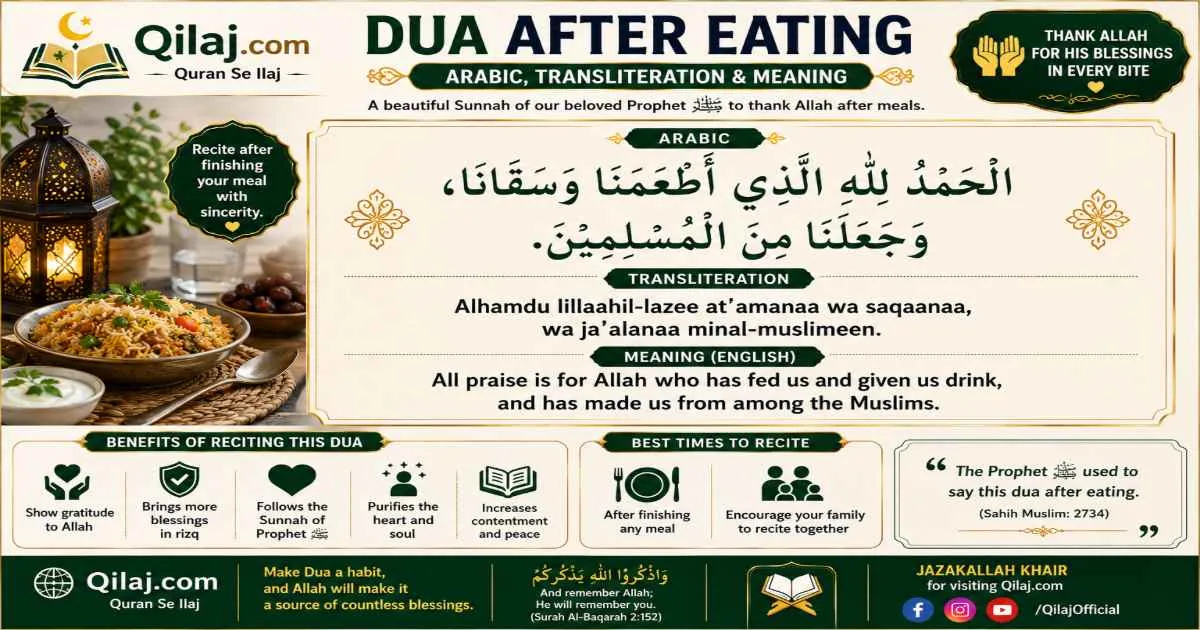
Quick answer: The most common dua after eating (khane ke baad ki dua, کھانے کے بعد کی دعا) is الْحَمْدُ لِلَّهِ الَّذِي أَطْعَمَنِي هَذَا وَرَزَقَنِيهِ مِنْ غَيْرِ حَوْلٍ مِنِّي وَلَا قُوَّةٍ – “All praise is for Allah who fed me this and provided it for me without any power or strength on my part.” It is reported in Tirmidhi (3458) and Abu Dawud (4023), graded hasan, and the Prophet ﷺ said whoever says it after a meal has his past sins forgiven.
🕋 Qilaj Islamic Activity Center
Sirf 1 minute: Qurani Hal, Tasbih ya Islamic Quiz start karein
آپ کی پریشانی کیا ہے؟
📿 33 Tasbih Challenge
33 bar SubhanAllah complete karein
🧠 Islamic Quiz Challenge
Dua After Eating in Arabic
الْحَمْدُ لِلَّهِ الَّذِي أَطْعَمَنِي هَذَا وَرَزَقَنِيهِ مِنْ غَيْرِ حَوْلٍ مِنِّي وَلَا قُوَّةٍ
Transliteration
Alhamdu lillahil-ladhi at’amani hadha wa razaqanihi min ghayri hawlin minni wa la quwwah.
English Meaning
All praise is for Allah, who fed me this and provided it for me without any might or power from me.
Urdu Tarjuma
تمام تعریفیں اللہ کے لیے ہیں جس نے مجھے یہ کھانا کھلایا اور میری کسی طاقت اور قوت کے بغیر مجھے یہ رزق عطا کیا۔
Source: Narrated by Mu’adh ibn Anas – Jami’ at-Tirmidhi 3458 (hasan) and Sunan Abi Dawud 4023. The promise of forgiveness of past sins is in the hadith; scholars note the extra words “and future sins” in one version are not established.
Other Authentic Duas After a Meal
1. Sahih al-Bukhari 5458
الْحَمْدُ لِلَّهِ كَثِيرًا طَيِّبًا مُبَارَكًا فِيهِ، غَيْرَ مَكْفِيٍّ وَلَا مُوَدَّعٍ وَلَا مُسْتَغْنًى عَنْهُ رَبَّنَا
Alhamdu lillahi kathiran tayyiban mubarakan fih, ghayra makfiyyin wa la muwadda’in wa la mustaghnan ‘anhu Rabbana. – Abundant, good and blessed praise be to Allah; praise that is never enough, never abandoned and never dispensed with, our Lord. The Prophet ﷺ said this when the dining sheet was lifted.
اللہ کی بہت زیادہ، پاکیزہ اور بابرکت تعریف، ایسی تعریف جو کبھی کافی نہ ہو، نہ چھوڑی جائے اور نہ اس سے بے نیازی ہو، اے ہمارے رب۔
2. Sunan Abi Dawud 3851
الْحَمْدُ لِلَّهِ الَّذِي أَطْعَمَ وَسَقَى وَسَوَّغَهُ وَجَعَلَ لَهُ مَخْرَجًا
Alhamdu lillahil-ladhi at’ama wa saqa wa sawwaghahu wa ja’ala lahu makhraja. – Praise be to Allah who gave food and drink, made it easy to swallow and made a way out for it (graded sahih, narrated by Abu Ayyub al-Ansari).
3. Simply “Alhamdulillah”
If you do not yet know the longer wording, saying Alhamdulillah sincerely still fulfils the basic Sunnah of thanking Allah after food. Then learn one of the full duas step by step.
When and How to Read It
- Begin the meal with Bismillah – see the dua before eating and what to say if you forget it.
- Eat with the right hand and from what is in front of you.
- When you finish, recite the dua after eating, quietly or aloud – both are fine.
- Avoid waste; finish what is on your plate where possible.
- After drinking water or tea you can also say Alhamdulillah.
During Ramadan the same dua is read after iftar and suhoor, along with the special iftar ki dua and the other Ramadan duas.
Gratitude Beyond Words
Allah says, “If you are grateful, I will surely increase you” (Quran 14:7). The dua after eating is the gratitude of the tongue; the gratitude of action is not wasting food, sharing with guests and neighbours, and eating halal. Our halal food guide helps readers in the West check common ingredients.
Teaching Children the Khane ke Baad ki Dua
Start with “Alhamdulillah”, then teach the Tirmidhi dua in three parts: Alhamdu lillahil-ladhi at’amani hadha / wa razaqanihi / min ghayri hawlin minni wa la quwwah. Saying it together at family meals is the easiest way for children to memorise it, along with the dua for entering the home and other daily duas.
خلاصہ: کھانے کے بعد کی مسنون دعا «الْحَمْدُ لِلَّهِ الَّذِي أَطْعَمَنِي هَذَا وَرَزَقَنِيهِ مِنْ غَيْرِ حَوْلٍ مِنِّي وَلَا قُوَّةٍ» ہے (ترمذی 3458)۔ اسے پڑھنے والے کے پچھلے گناہ معاف ہونے کی بشارت حدیث میں آئی ہے۔
Related Reading
FAQ
What is the dua after eating?
Alhamdu lillahil-ladhi at’amani hadha wa razaqanihi min ghayri hawlin minni wa la quwwah (Tirmidhi 3458, hasan).
What is the reward of the dua after eating?
The hadith says whoever says it after eating will have his previous sins forgiven.
Is there a dua after eating in Sahih Bukhari?
Yes. Bukhari 5458: Alhamdu lillahi kathiran tayyiban mubarakan fih, ghayra makfiyyin wa la muwadda’in wa la mustaghnan ‘anhu Rabbana.
Do I have to say the dua out loud?
No. It can be said quietly or aloud; saying it aloud helps children learn.
What if I only remember Alhamdulillah?
Saying Alhamdulillah sincerely is a valid way to thank Allah. Try to learn one of the full authentic duas over time.
Source & review: References: Quran (quran.com 14:7), Hadith (sunnah.com: Tirmidhi 3458, Abu Dawud 4023, Bukhari 5458, Abu Dawud 3851). Content reviewed by Qilaj editorial team.
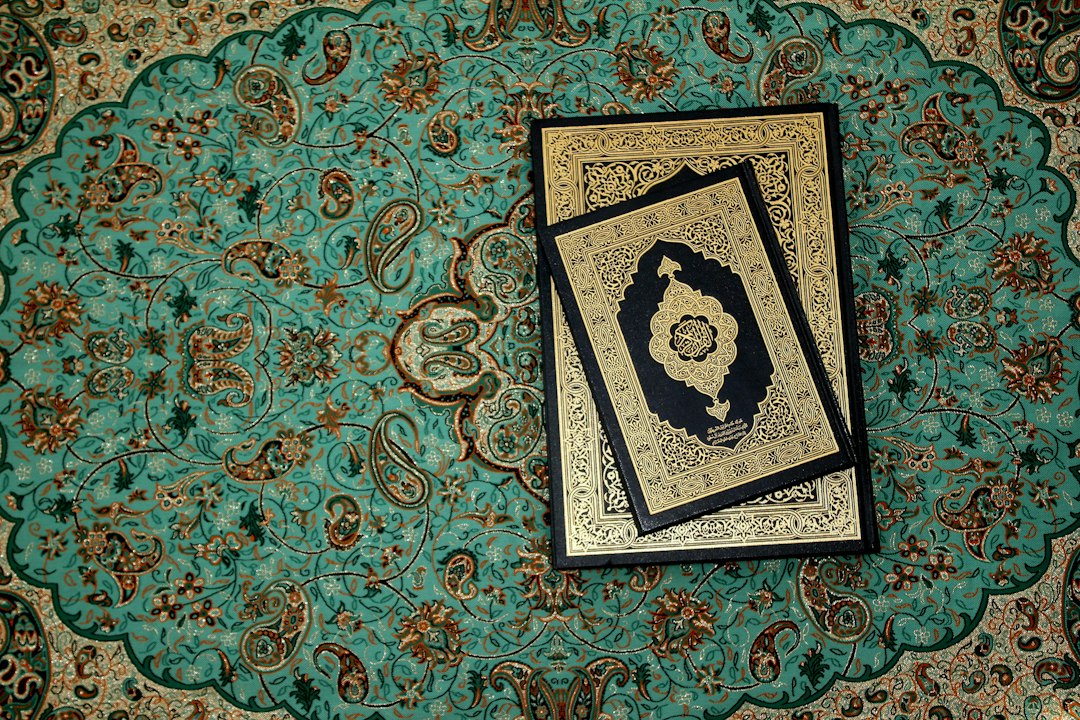
, reward and other authentic duas after a meal.)