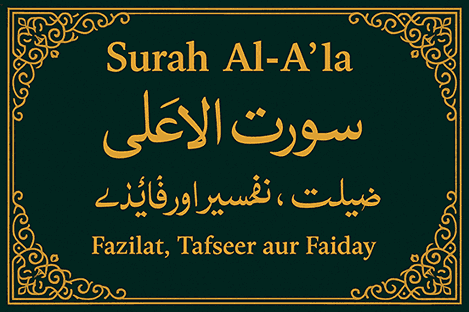
Surah Al-A’la – Complete Arabic, English & Urdu
Surah Al-A’la highlights the supremacy and creative wisdom of God, establishes the divine protection of revelation, and underscores that soul purification and the eternal Hereafter far outweigh temporary worldly gains.
🕋 Qilaj Islamic Activity Center
Sirf 1 minute: Qurani Hal, Tasbih ya Islamic Quiz start karein
آپ کی پریشانی کیا ہے؟
📿 33 Tasbih Challenge
33 bar SubhanAllah complete karein
🧠 Islamic Quiz Challenge

Arabic Text
بِسْمِ اللَّهِ الرَّحْمَٰنِ الرَّحِيمِ
سَبِّحِ اسْمَ رَبِّكَ الْأَعْلَى (1) الَّذِي خَلَقَ فَسَوَّىٰ (2) وَالَّذِي قَدَّرَ فَهَدَىٰ (3) وَالَّذِي أَخْرَجَ الْمَرْعَىٰ (4) فَجَعَلَهُ غُثَاءً أَحْوَىٰ (5)
سَنُقْرِئُكَ فَلَا تَنسَىٰ (6) إِلَّا مَا شَاءَ اللَّهُ ۚ إِنَّهُ يَعْلَمُ الْجَهْرَ وَمَا يَخْفَىٰ (7) وَنُيَسِّرُكَ لِلْيُسْرَىٰ (8) فَذَكِّرْ إِن نَّفَعَتِ الذِّكْرَىٰ (9) سَيَذَّكَّرُ مَن يَخْشَىٰ (10) وَيَتَجَنَّبُهَا الْأَشْقَى (11) الَّذِي يَصْلَى النَّارَ الْكُبْرَىٰ (12) ثُمَّ لَا يَمُوتُ فِيهَا وَلَا يَحْيَىٰ (13) قَدْ أَفْلَحَ مَن تَزَكَّىٰ (14) وَذَكَرَ اسْمَ رَبِّهِ فَصَلَّىٰ (15) بَلْ تُؤْثِرُونَ الْحَيَاةَ الدُّنْيَا (16) وَالْآخِرَةُ خَيْرٌ وَأَبْقَىٰ (17) إِنَّ هَٰذَا لَفِي الصُّحُفِ الْأُولَىٰ (18) صُحُفِ إِبْرَاهِيمَ وَمُوسَىٰ (19)
Surah Al-A’la Transliteration
- Sabbihi-sma Rabbika-l-A’la
- Alladhee khalaqa fasawwa
- Walladhee qaddara fahada
- Walladhee akhraja-l-mar’a
- Faja’alahu ghutha-an ahwa
- Sanuqi’uka fala tansa
- Illa ma sha’a Allah, innahu ya’lamu-l-jahra wa ma yakhfa
- Wa nuyassiruka lilyusra
- Fadhakkir in nafa’ati-dh-dhikra
- Sayadh-dhakkaru man yakhsha
- Wa yatajannabuha-l-ashqa
- Alladhee yasla-n-nara-l-kubra
- Thumma la yamootu feeha wa la yahya
- Qad aflaha man tazakka
- Wa dhakara-sma Rabbihi fasalla
- Bal tu’thiroona-l-hayata-d-dunya
- Wal-Aakhiratu khayrun wa abqa
- Inna hadha lafee-s-suhufi-l-oola
- Suhufi Ibraheema wa Moosa
Surah Al-A’la Meaning and Translation
1. Glorify the name of your Lord, the Most High,
2. Who created and proportioned,
3. And Who destined and guided,
4. And Who brought forth the pasture,
5. And then made it dark stubble.
6. We shall make you recite, so you will not forget,
7. Except what Allah wills. Indeed, He knows what is overt and what is hidden.
8. And We will ease you toward ease.
9. So remind, if the reminder benefits.
10. The one who fears Allah will remember,
11. But the most wretched will avoid it,
12. The one who will enter the great Fire,
13. Wherein he will neither die nor live.
14. Successful indeed is the one who purifies himself,
15. And remembers the name of his Lord and prays.
16. But you prefer the worldly life,
17. While the Hereafter is better and everlasting.
18. Indeed, this is in the former scriptures,
19. The scriptures of Abraham and Moses.
Urdu Translation
1. اپنے ربِ اعلیٰ کے نام کی تسبیح کرو۔
2. جس نے پیدا کیا اور درست و متناسب بنایا۔
3. اور جس نے تقدیر بنائی، پھر راہ دکھائی۔
4. اور جس نے سبز چارہ نکالا۔
5. پھر اسے سیاہ کوڑا کر دیا۔
6. ہم آپ کو پڑھائیں گے، پھر آپ نہیں بھولیں گے۔
7. مگر جو اللہ چاہے۔ بیشک وہ ظاہر اور پوشیدہ سب جانتا ہے۔
8. اور ہم آپ کے لیے آسانی والے راستے کو مزید آسان کر دیں گے۔
9. پس آپ نصیحت کرتے رہیں اگر نصیحت فائدہ دے۔
10. جو شخص اللہ کا خوف رکھتا ہے وہ ضرور نصیحت حاصل کرے گا۔
11. اور انتہائی بدبخت اس سے دور رہے گا۔
12. جو سب سے بڑی آگ میں داخل ہو گا۔
13. پھر نہ وہ اس میں مرے گا اور نہ زندہ رہے گا۔
14. یقیناً فلاح پا گیا وہ جس نے تزکیہ (پاکیزگی) اختیار کیا۔
15. اور اپنے رب کا نام یاد کیا اور نماز ادا کی۔
16. لیکن تم دنیا کی زندگی کو ترجیح دیتے ہو۔
17. حالانکہ آخرت کہیں بہتر اور ہمیشہ باقی رہنے والی ہے۔
18. بیشک یہ بات پچھلے صحیفوں میں بھی لکھی ہوئی تھی۔
19. یعنی ابراہیم اور موسیٰ علیہما السلام کے صحیفوں میں۔
Surah Al-A’la Tafseer & Themes
Surah Al-A‘la is an early Makkan surah that highlights divine transcendence, the preservation of revelation, and the eternal priority of the Hereafter. As the 87th chapter of the Quran containing 19 verses, it belongs to the renowned group known as Al-Musabbihat, surahs that commence directly with the glorification (tasbih) of Allah. The surah derives its name from the opening verse commanding humanity to glorify the name of the Most High.
The surah opens by directing human contemplation toward the flawless design in nature. Allah created every living creature with precision, determined its role, and guided it toward its biological sustenance. The natural life cycle of vegetation, emerging lush and green before withering into dark, decayed chaff, serves as a poignant parable. This swift botanical decay illustrates the fleeting nature of worldly life compared to the permanence of the afterlife.
Historically, the revelation offered immense comfort to the Prophet Muhammad ﷺ during the arduous early Makkan period. When receiving revelation through Angel Jibreel, the Prophet ﷺ would hasten his tongue to commit every word to memory. Allah removed this anxiety by promising that the Prophet ﷺ would be enabled to recite the Quran without forgetting a single verse, establishing the divine preservation of the text.
The moral core of the surah centers upon Tazkiyah, the purification of the human soul. True prosperity is not determined by worldly accumulation, but by moral refinement, consistent remembrance of God, and the establishment of prayer. The chapter presents a clear contrast between two outcomes:
| Path | Attributes | Ultimate Outcome |
|---|---|---|
| The Mindful (Man Yakhsha) | Fears Allah, purifies the soul (Tazkiyah), remembers God, and establishes regular prayer | Attains absolute spiritual success and the everlasting reward of the Hereafter |
| The Wretched (Al-Ashqa) | Turns away from the reminder, chases temporal luxuries, and neglects spiritual duty | Enters the Great Fire, trapped in an eternal state between death and life |
The surah concludes by affirming the continuity of divine message across human history. The core teachings of Surah Al-A’la, exalting the supremacy of the Hereafter over material pleasures, were previously revealed in the ancient scrolls (Suhuf) of Abraham and Moses. This historical link demonstrates that the fundamental message of monotheism and moral accountability has remained identical across all prophetic dispensations.
Surah Al-A’la Virtues & Hadith
Classical Hadith literature documents the distinct affection the Prophet Muhammad ﷺ held for this chapter. Authentic narrations record that the Prophet ﷺ regularly recited Surah Al-A’la in essential communal gatherings and regular night prayers.
Several Sunnah contexts highlight the regular recitation of this chapter:
- Surah Al-A’la in Witr Prayer: According to multiple authentic traditions recorded in Sunan an-Nasa’i and Jami` at-Tirmidhi, the Prophet ﷺ frequently recited Surah Al-A’la in the first rak’ah of the three-rak’ah Witr prayer, followed by Surah Al-Kafirun in the second and Surah Al-Ikhlas in the third.
- Friday (Jumu’ah) and Eid Prayers: Sahih Muslim records on the authority of Nu’man ibn Bashir that the Messenger of Allah ﷺ would recite Surah Al-A’la and Surah Al-Ghashiyah during the Friday congregation and the two Eid prayers. When Friday and Eid coincided on the same day, he recited them in both services.
- The Response to Tasbih: Classical scholars, including Ibn Abbas, reported that whenever the Prophet ﷺ recited the first verse, “Glorify the name of your Lord, the Most High,” he would respond with: “Subhana Rabbiya-l-A’la” (Glory be to my Lord, the Most High).
Reflecting upon Surah Al-A’la grants believers spiritual clarity, realigning worldly pursuits with eternal objectives. Regular recitation fosters humility before the Creator, instills vigilance over one’s moral state, and provides lasting peace through regular dhikr and prayer.